AI can now design a drug that works in humans. The hard part is that the world just decided to stop sharing.
Modern medicine is now designed at the level of individual atoms. The old way was to throw millions of compounds at a protein and pray. The new way is to draw the molecule that fits. (Surface model of a human IgG1 antibody — Wikimedia Commons, CC BY-SA)
For roughly a hundred years, the way humanity found new medicines was, in the polite language of the industry, empirical. In less polite language: guessing at scale.
AI's water problem is smaller than you've been told. Water's problem is far bigger — and, for the first time, solvable.
A hyperscale campus at dusk: rows of heat-rejection units on the left, backup generators on the right, raw desert beyond the fence line.
Sometime in the last two years, a very old argument about water got a very new participant.
For most of human history, the fight over who gets the river has been between farmers, cities, and fish. Then, in a string of town-hall meetings across Arizona, Georgia, Virginia, and the flat brown counties of central Texas, a new applicant started showing up on the utility docket. It doesn't grow anything. It doesn't employ many people. It arrives as a set of engineering drawings for a windowless building the size of several football fields, and it asks the local water authority a question that sounds simple and isn't: how many million gallons a day can you commit to us, and can you commit them on the hottest day of the year?
Face to face with our own reflection: NASA's Robonaut stands where a human would, mirrored in the visor of an empty spacesuit. We keep building machines in our own image — but the ones that actually work are abandoning the resemblance. (Photo: NASA / Robert Markowitz, public domain)
The most useful robots on Earth look nothing like us — they're rolling boxes, laser-armed gantries, and robot dogs, not the humanoids we were promised. Here's why function is quietly beating form in the design of machines. And, in the background, why the race to build them has become a defining rivalry between the United States and China — with Japan playing a shrewd third hand.
On the night of June 2, 2026, a Chinese robot dance troupe upstaged every human act on the season premiere of America's Got Talent.
The hottest idea in AI isn't a large language model. It's a machine that can close its eyes, imagine what happens next—and be right.
In the spring of 2026, Yann LeCun—Turing Award winner, one of the three "godfathers" of deep learning—stood on a stage in Paris, picked up a pen, and balanced it on its tip. Then he asked the room a question a four-year-old could answer.
A SiFive FE310 RISC-V microprocessor on a HiFive board. SiFive was founded by RISC-V's Berkeley creators. Photo: Gareth Halfacree / Wikimedia Commons (CC BY-SA 2.0).
There is a sentence that security researchers, hardware startups, and the governments of at least three continents have all, in their own way, come to believe: you can put a company on a blacklist, but you cannot put a language on one.
The anatomy of the AI era, in miniature: the large central die is the processor, and the four slabs hugging it are stacks of High Bandwidth Memory — all on a shared slice of silicon. This is an AMD Fiji package. Photo: C. Spille / pcgameshardware.de, CC BY-SA 4.0, via Wikimedia Commons.
On June 25, 2026, the artificial intelligence insurgence quietly arrived at the cash register of your local Apple Store.
The Voyager design: the white parabolic dish is the high-gain antenna, always pointed at Earth; instruments and the nuclear generators extend on booms to either side, and the thin magnetometer mast stretches 13 meters off the body. Credit: NASA/JPL-Caltech (Wikimedia Commons, public domain).
In November 2026, a 49-year-old machine will quietly cross a line no object built by human hands has ever reached. NASA's Voyager 1 will be one full light-day from Earth—so far that a radio signal, moving at the fastest speed the universe permits, needs an entire day to make the trip. Say "good morning" to the spacecraft on Monday, and you will not hear it answer until Wednesday.
In Memphis, Tennessee, there's a building where 200,000 of the world's most powerful processors think in unison. xAI's Colossus supercomputer went from bare warehouse floor to 100,000 liquid-cooled NVIDIA H100 GPUs in 122 days — then doubled to 200,000 in another 92 — with a stated roadmap toward one million. Together with SpaceX's ambitions, the buildout behind machines like this is projected to consume more than $300 billion in capital spending by the end of the decade.
The modern web is held up by infrastructure almost no one can name. Illustration: original.
There is a comforting myth about the internet, and it goes like this: the thing was designed to survive a nuclear war. Born of Cold War paranoia, it was supposed to be a hydra — decentralized, redundant, impossible to behead. Sever one path and the packets simply route around the wound.
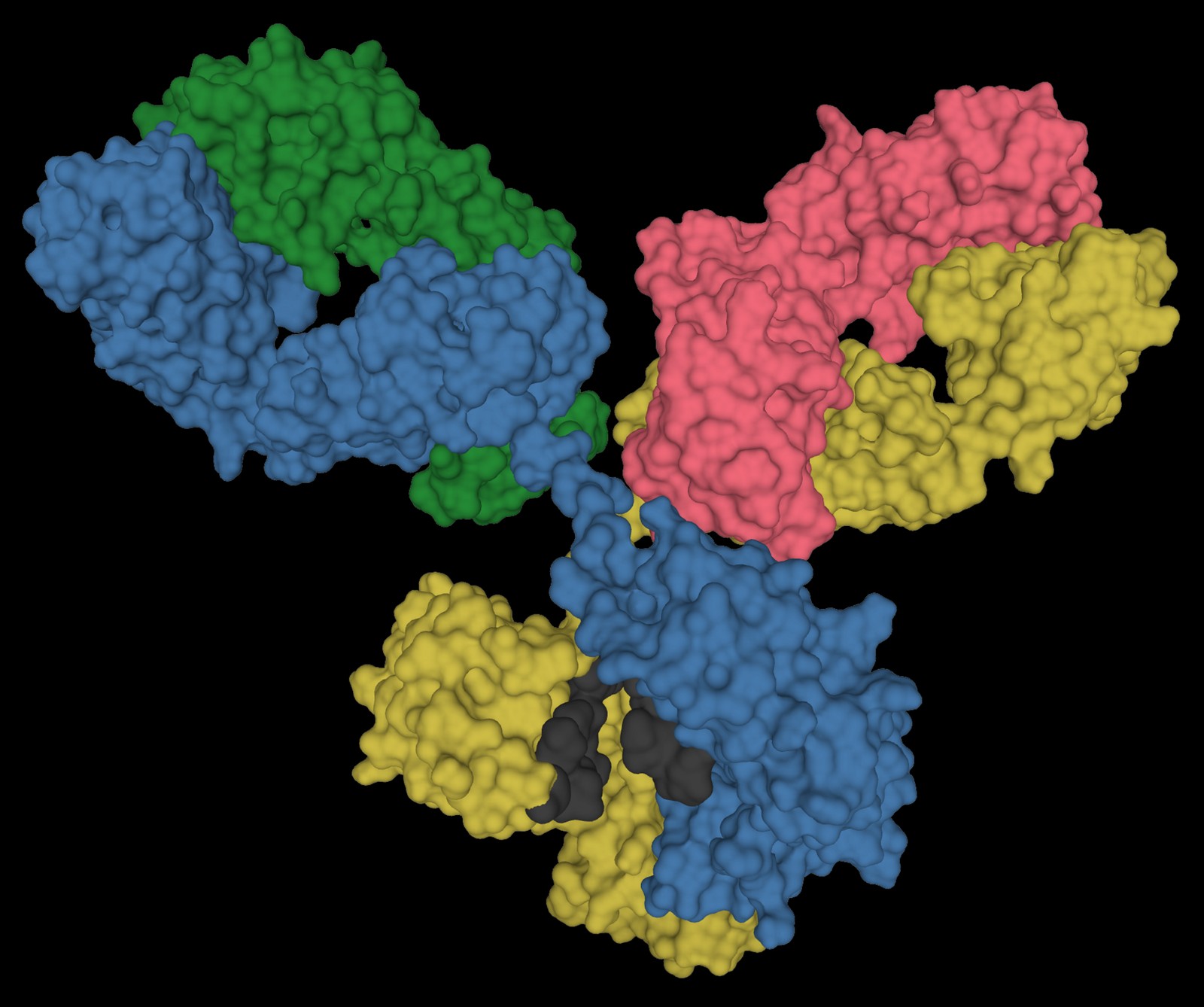 Modern medicine is now designed at the level of individual atoms. The old way was to throw millions of compounds at a protein and pray. The new way is to draw the molecule that fits. (Surface model of a human IgG1 antibody — Wikimedia Commons, CC BY-SA)
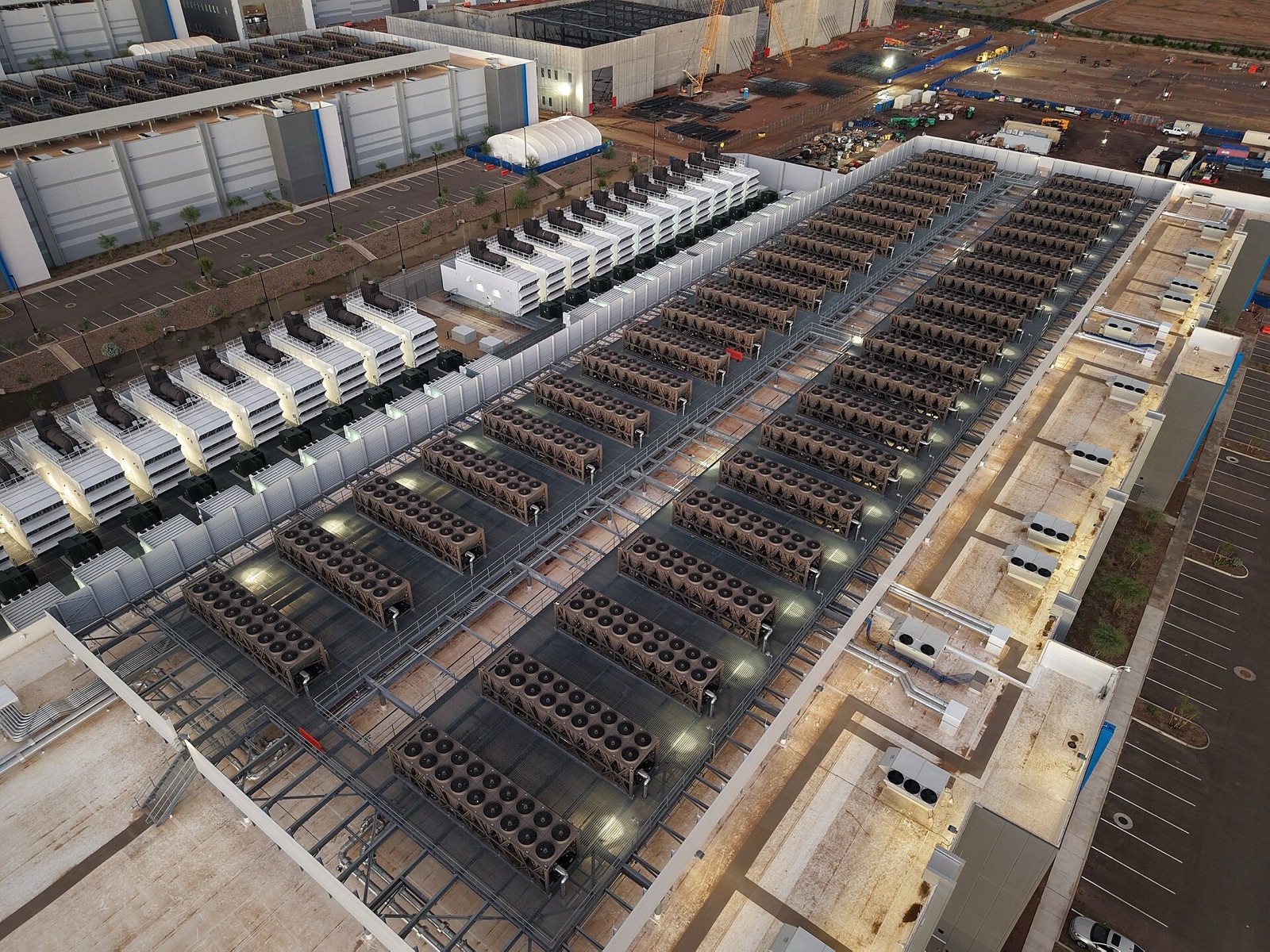 A hyperscale campus at dusk: rows of heat-rejection units on the left, backup generators on the right, raw desert beyond the fence line.
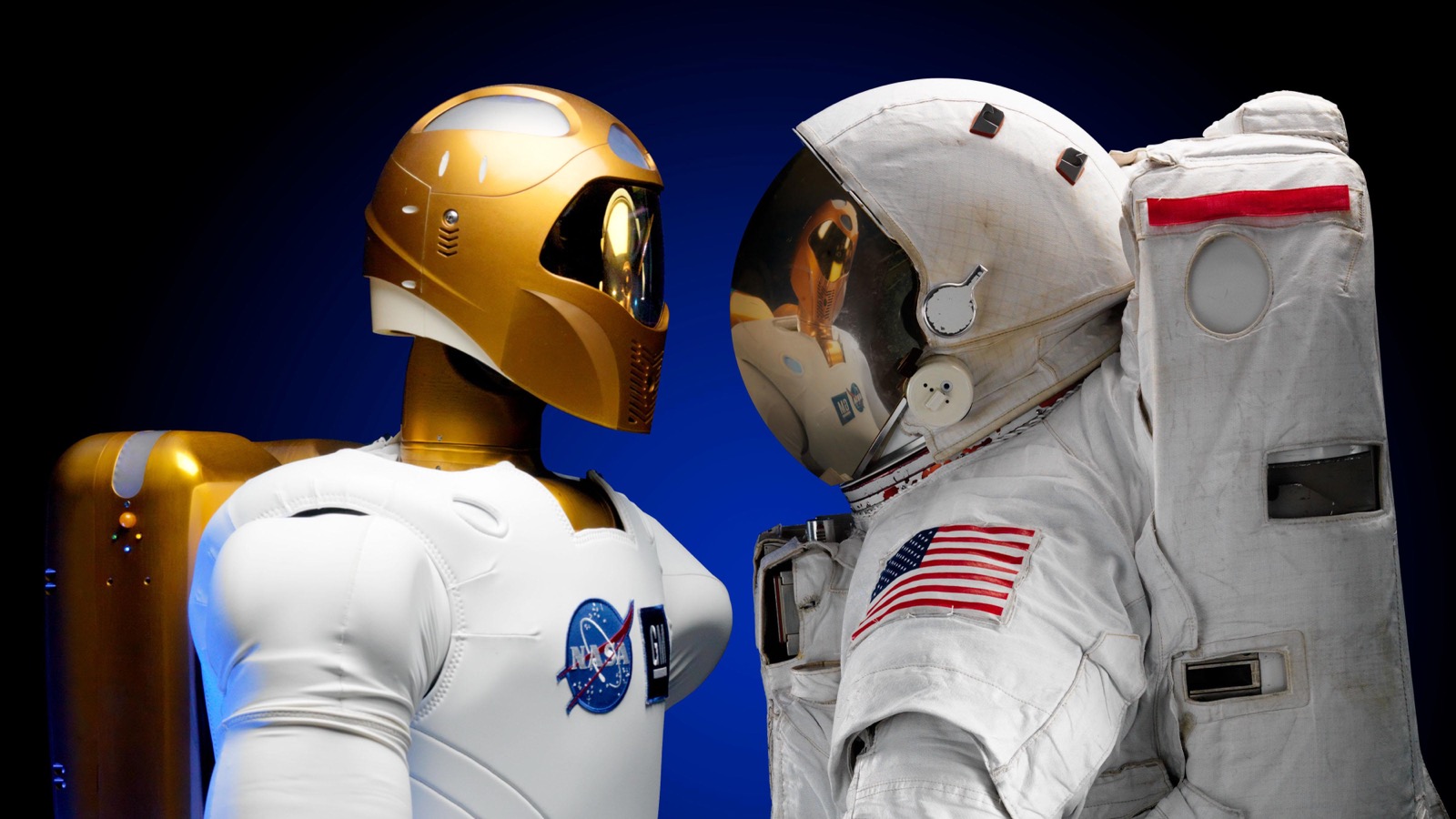 Face to face with our own reflection: NASA's Robonaut stands where a human would, mirrored in the visor of an empty spacesuit. We keep building machines in our own image — but the ones that actually work are abandoning the resemblance. (Photo: NASA / Robert Markowitz, public domain)
 A playable world conjured from a single prompt by Google DeepMind's Genie 3. No 3D engine, no hand-built level—just a neural network that has learned how reality tends to unfold. Image: © Google DeepMind (editorial/press use).
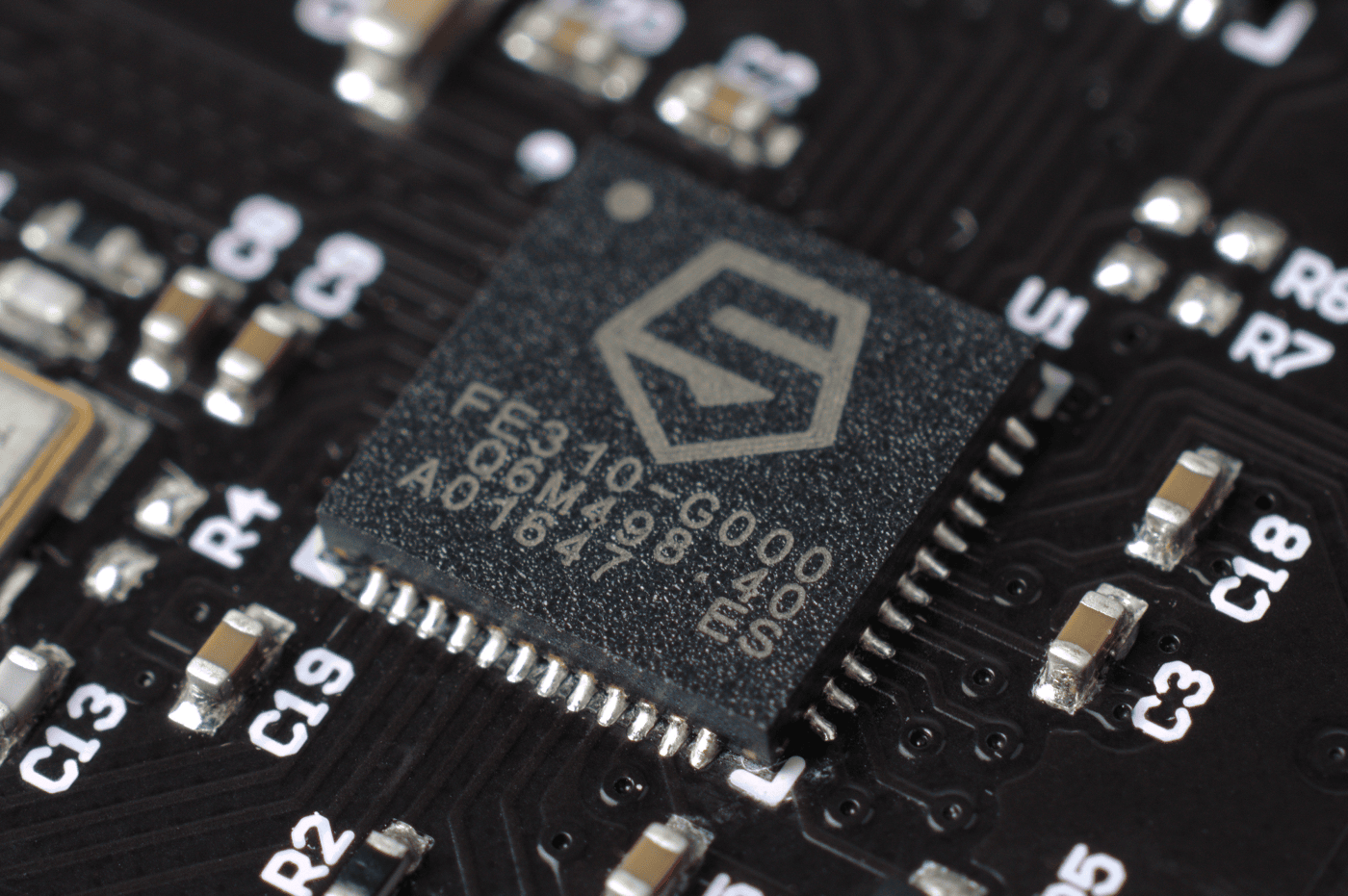 A SiFive FE310 RISC-V microprocessor on a HiFive board. SiFive was founded by RISC-V's Berkeley creators. Photo: Gareth Halfacree / Wikimedia Commons (
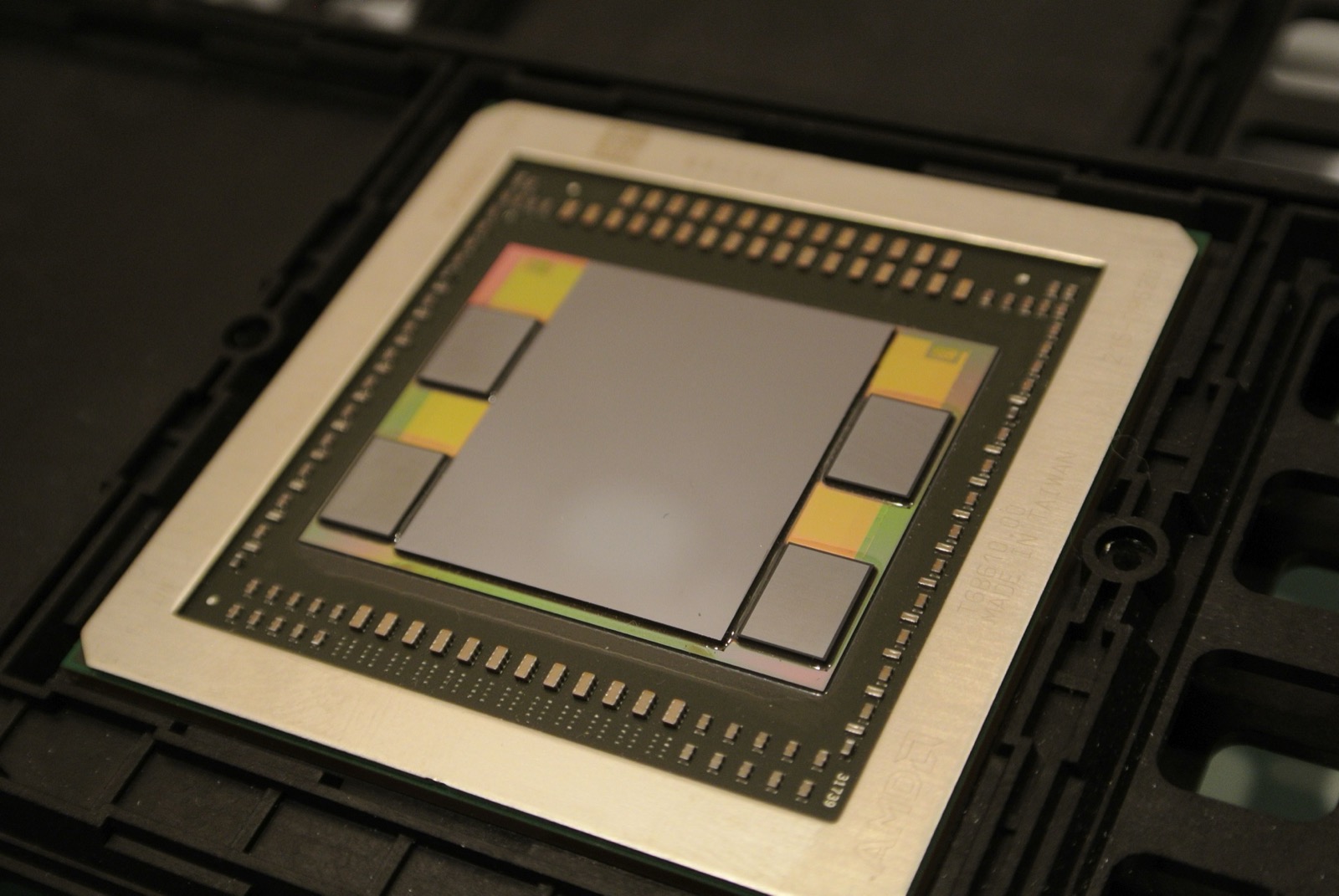 The anatomy of the AI era, in miniature: the large central die is the processor, and the four slabs hugging it are stacks of High Bandwidth Memory — all on a shared slice of silicon. This is an AMD Fiji package. Photo: C. Spille / pcgameshardware.de,
 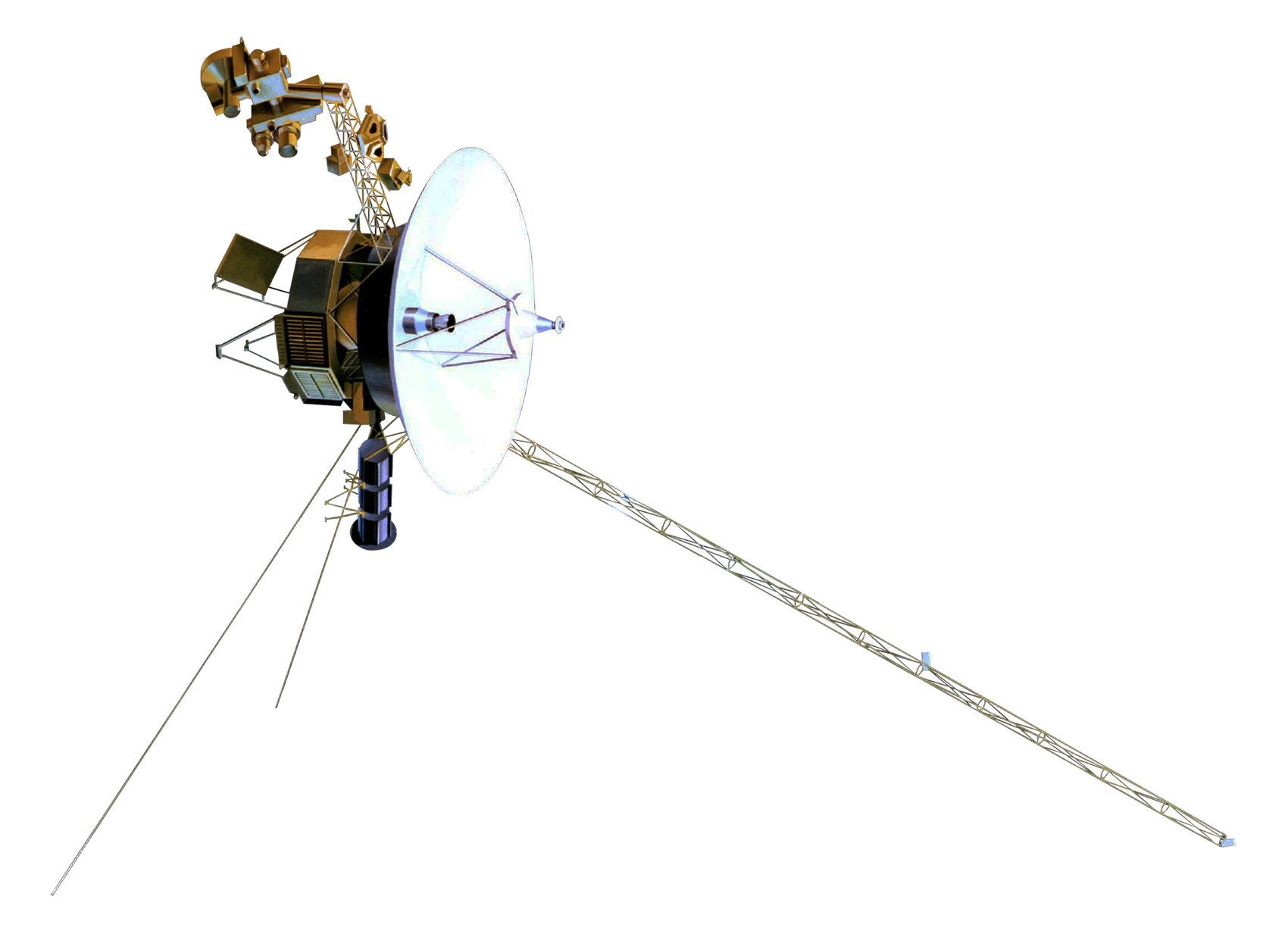 The Voyager design: the white parabolic dish is the high-gain antenna, always pointed at Earth; instruments and the nuclear generators extend on booms to either side, and the thin magnetometer mast stretches 13 meters off the body. Credit: NASA/JPL-Caltech (Wikimedia Commons, public domain).
 Inside Colossus: aisle after aisle of liquid-cooled Supermicro racks in Memphis, Tennessee. Photo: © Super Micro Computer, Inc. / xAI Corp. (Supermicro case study).
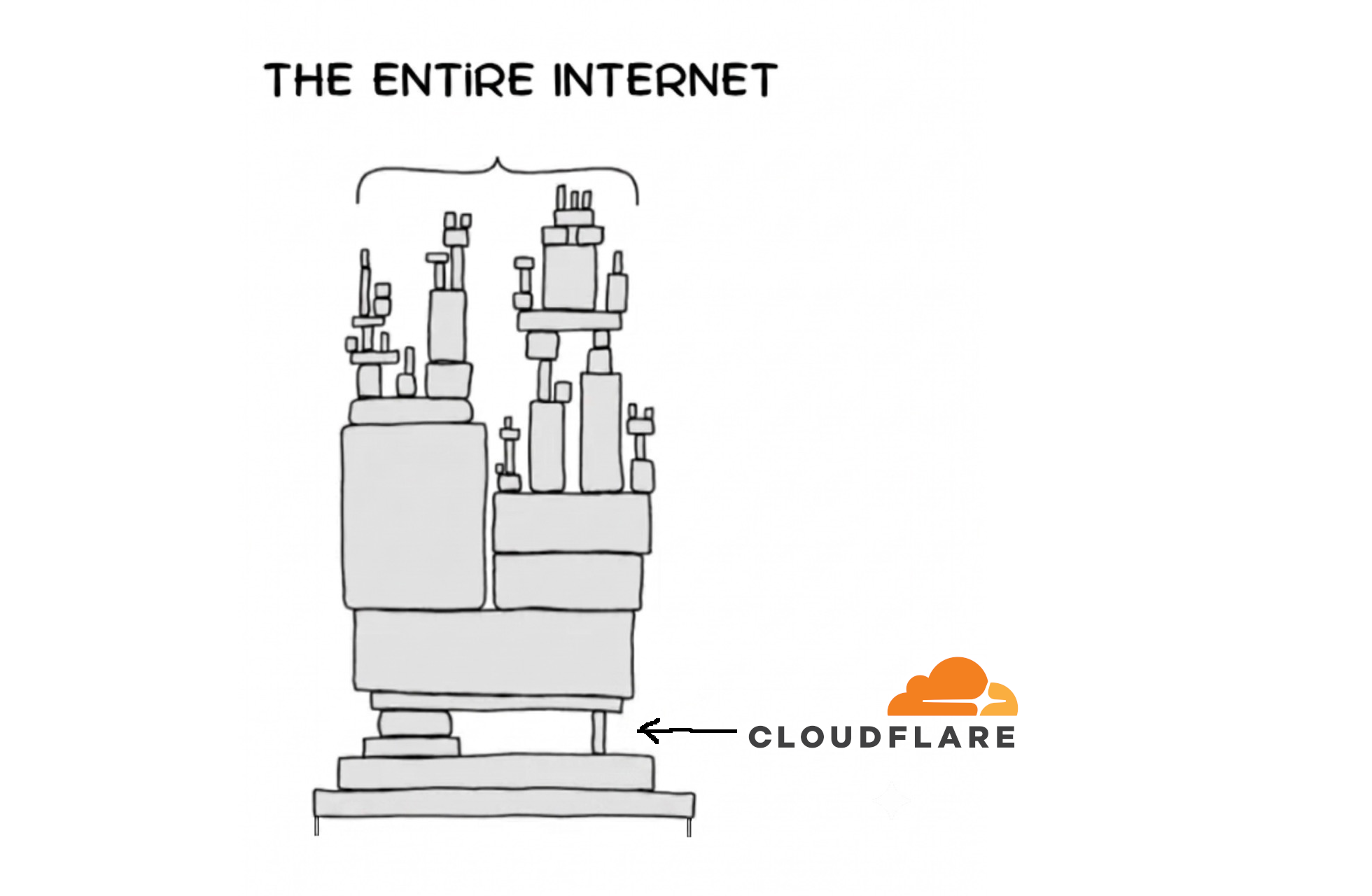 The modern web is held up by infrastructure almost no one can name. Illustration: original.