Is Mobile Eating the PC? The MacBook Neo, the Googlebook, and the Laptop That Became a Phone
· 38 min read
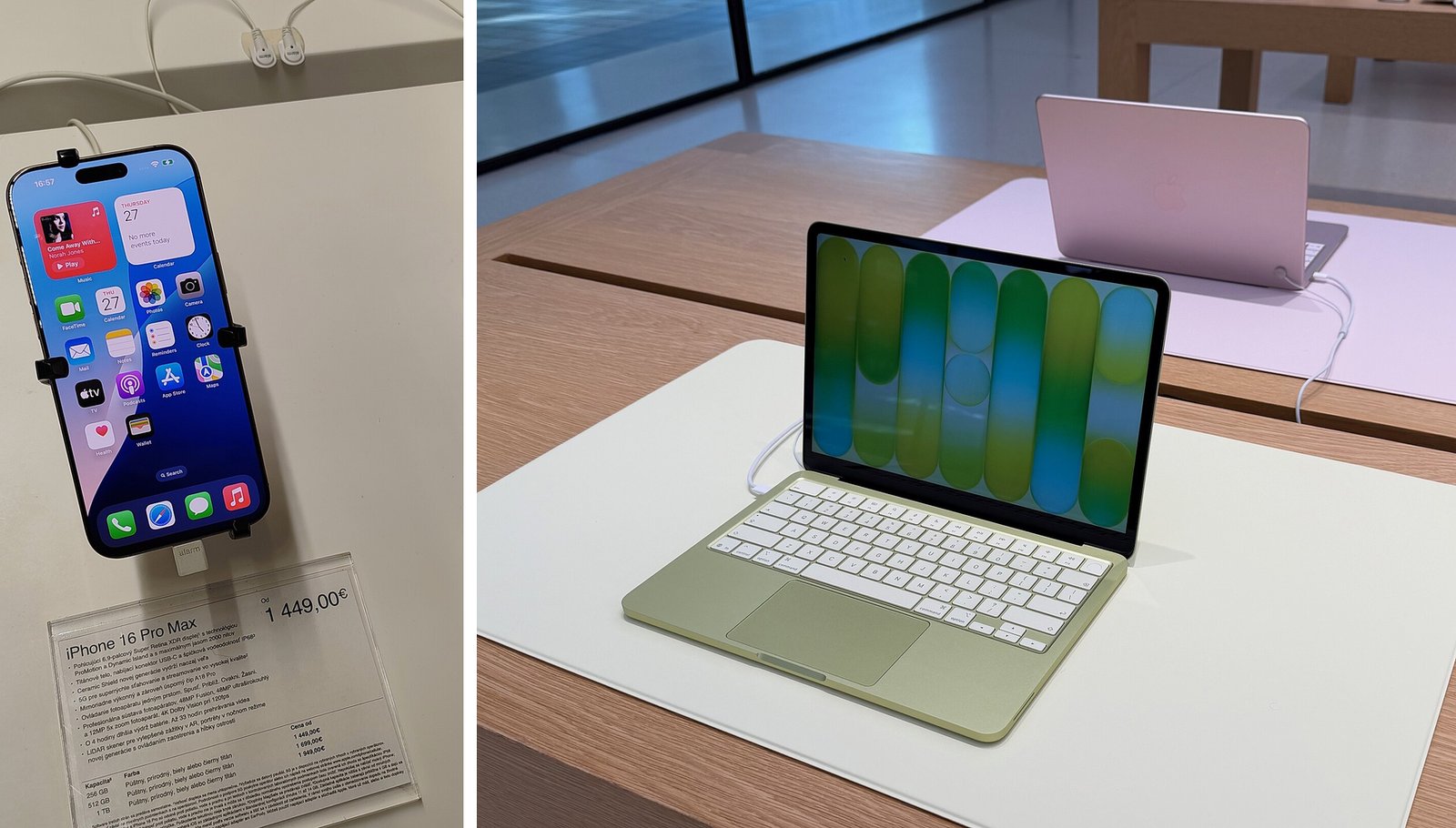
For forty years we told ourselves a comforting story. There were real computers, and then there were phones.
Real computers were beige towers and heavy notebooks that hummed and blew hot air. They had sockets and slots, DIMMs you could pull out with your thumbs, graphics cards the size of a brick, and an x86 processor that could run software written before you were born. Phones were the little sibling. They were sealed and soldered, thermally starved, kept on a tight battery budget, and built around an ARM chip whose whole job was to sip power and stay cool in your pocket.
In 2026, that story died twice.
In March, Apple shipped the MacBook Neo, a $599 Mac whose processor is not a "laptop chip" at all. It is the A18 Pro, the exact chip that powered the iPhone 16 Pro in 2024. Apple's own announcement called it "the first Mac powered by an iPhone chip".
In October, Google shipped the Googlebook, a laptop line whose operating system is not ChromeOS. It is Android, the phone OS, rebuilt for the desktop.
Read those two sentences again. Apple took the phone's chip and put it in a laptop. Google took the phone's operating system and put it in a laptop. Two of the most powerful companies in computing, working independently, reached the same conclusion in the same year from opposite ends of the stack.
The question used to be "will phones replace PCs?" That was always the wrong question. The phone never had to replace the PC. It just had to become it.
This article traces how that happened: the two machines that finished the job, the forty-year convergence that led to them, and the silicon, memory, kernels, runtimes, translation layers, browser technology and market forces that made the result inevitable. The conclusion is not subtle. The PC has rewritten its own DNA, and the code it copied came from the smartphone.
Part I: The Two Bites
1.1 The MacBook Neo: The Phone's Chip
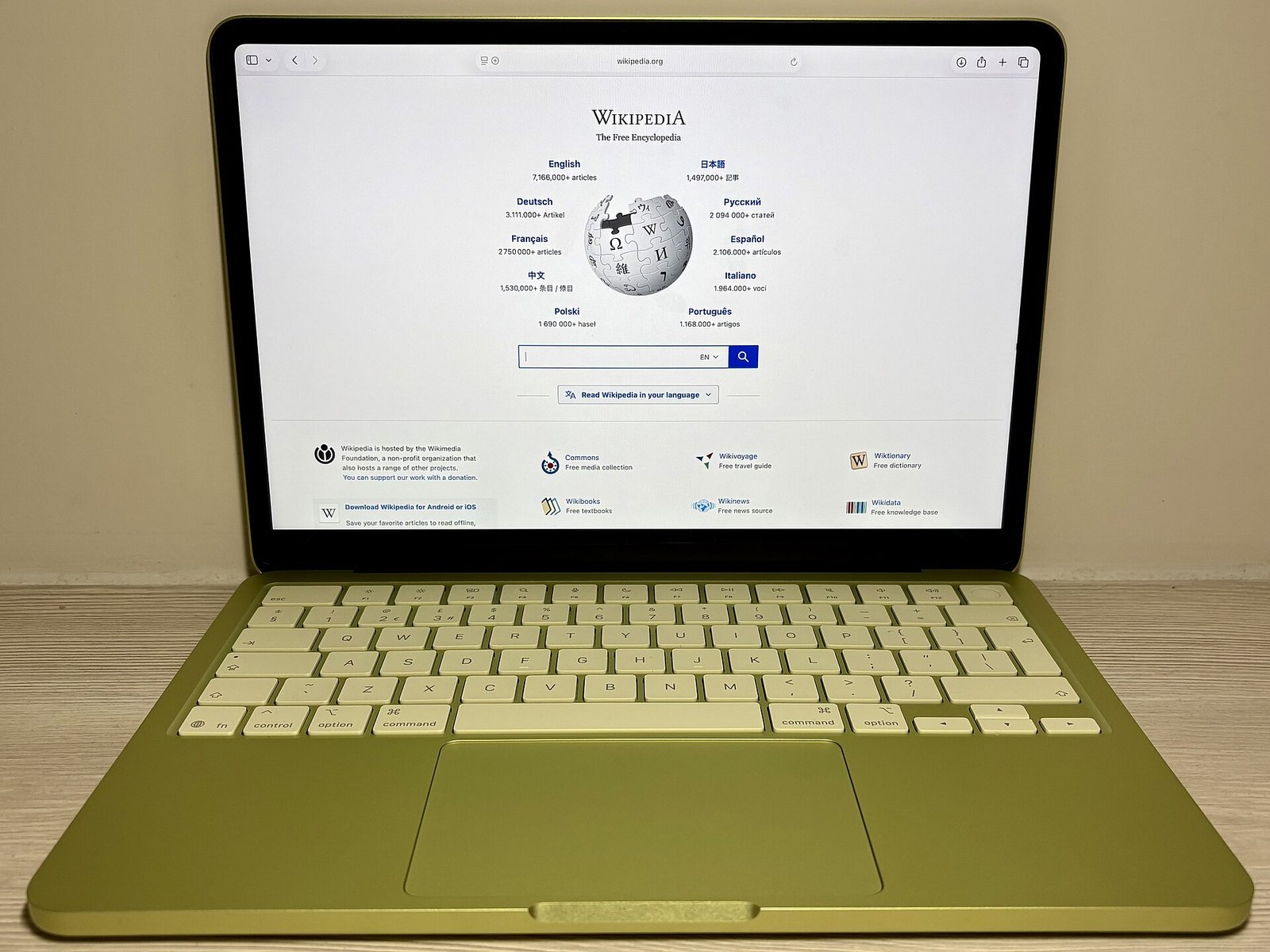
Every Apple silicon Mac before March 2026 used an M-series chip: a processor designed for the Mac, even if it borrowed heavily from iPhone designs. The MacBook Neo broke that rule. It is the first Mac sold with an A-series chip. The only earlier exception was the 2020 Developer Transition Kit, a Mac mini with an iPad's A12Z inside, which was never sold to the public.
The chip is the A18 Pro, which debuted in the iPhone 16 Pro. It is not a cousin or a derivative. It is the same chip, binned and reused:
| Specification | A18 Pro in iPhone 16 Pro (2024) | A18 Pro in MacBook Neo (2026) |
|---|---|---|
| Process | TSMC 3nm (N3E) | TSMC 3nm (N3E) |
| CPU | 6 cores (2 Performance + 4 Efficiency) | 6 cores (2P @ 4.04 GHz + 4E @ 2.42 GHz) |
| GPU | 6 cores | 5 cores (one disabled through binning) |
| Neural Engine | 16 cores, 35 TOPS | 16 cores, 35 TOPS |
| Memory | 8GB LPDDR5X | 8GB LPDDR5X-7500, 60 GB/s |
| Cooling | Passive, inside a phone | Passive, fanless laptop chassis |
That five-core GPU tells the whole story. Apple took A18 Pro dies from the iPhone production line, including ones with a single defective GPU core that could not go into a phone, and turned them into a Mac. The laptop is literally made from the phone's leftovers.
And it works. On Geekbench 6, the MacBook Neo scores about 3,541 single-core and 8,958 multi-core. That beats the M1 MacBook Air on both counts, and the single-core number is close to the M4 MacBook Air, which scores about 3,680. Multi-core is a different story: two performance cores are no match for the M4's four, and the M4 Air lands around 14,900. But for the browsing, documents, video calls and light creative work that most laptops actually do, a phone chip from 2024 is simply enough. Apple claims the Neo is up to 50% faster at web browsing and up to 3x faster at on-device AI than Windows laptops built on Intel's Core Ultra 5.
The rest of the machine reads like a phone spec sheet stretched across 13 inches:
- No fan. Where the MacBook Air uses a metal heat spreader, the Neo makes do with a graphene sheet. It throttles under sustained load, a little more noticeably than an M2 Air. One YouTuber added a copper plate and thermal pads and watched multi-core scores rise from 7,921 to 8,692; with external liquid cooling, the same chip reached 9,394. The chip is held back by its thermal envelope, not its design.
- 8GB of unified memory, fixed. It cannot be upgraded or configured.
- Phone-class battery thinking. A 36.5Wh battery gives up to 16 hours of video streaming.
- Phone-class I/O. One 10Gbps USB-C port, one USB 2 port, a headphone jack, and support for a single external 4K display.
- A phone price. It launched at $599 ($499 for education), less than a flagship iPhone.
Reviewers were almost unanimous. Fast Company's Harry McCracken called it "one of Apple's best recent products, even though its innovation is all about thoughtful cost control". That line is the key to the whole machine. The innovation was not inventing a new chip. The innovation was realizing a new chip wasn't needed. The phone chip was already good enough to be a PC.
1.2 The Googlebook: The Phone's Operating System

To see how big Google's break is, start with what it walked away from.
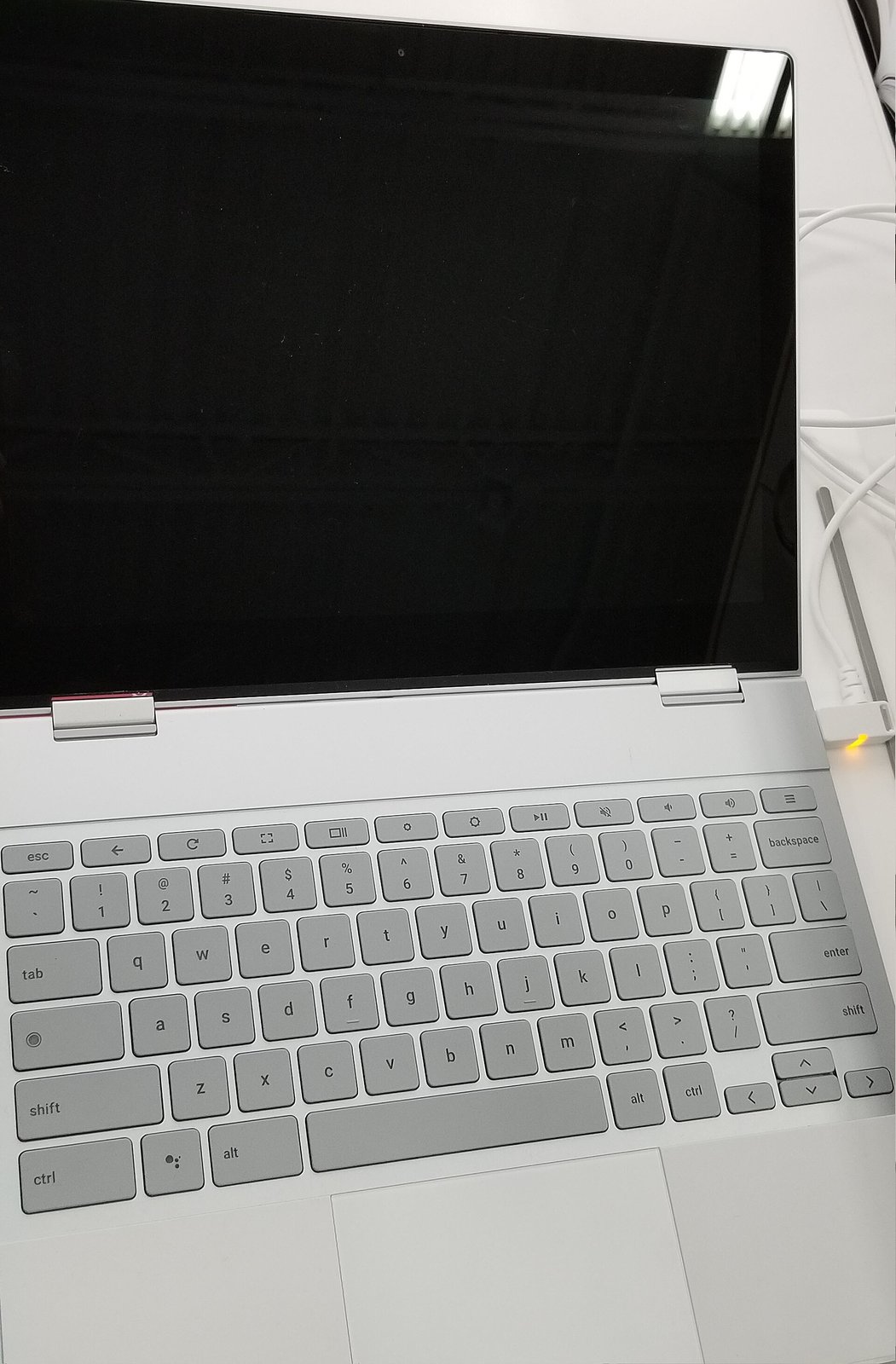
The Chromebook was a beautiful, stubborn idea: the computer is the cloud, and the laptop is just a window onto it. Machines like the Pixelbook Go, Google's last first-party Chromebook, ran low-power 8th-Gen Intel Core m3, i5 or i7 chips with a modest 8GB to 16GB of RAM. ChromeOS was, at heart, a web browser sitting on a locked-down Linux kernel, designed to keep local background processes from ever slowing the machine down. The heavy lifting happened somewhere else, in a data center you would never see.
That philosophy is now dead. Google killed it on purpose.
The Googlebook opened for pre-order on September 21, 2026 and started shipping on October 4. Its operating system, Googlebook OS, developed under the internal codename Aluminium, is not ChromeOS with a new coat of paint. It is a desktop-optimized distribution of Android that has swallowed the consumer ChromeOS branch whole. ChromeOS Flex and the enterprise versions live on, but the consumer future belongs to Android. Underneath, every Googlebook runs the Android technology stack, while keeping the familiar parts of ChromeOS on top: the full desktop Chrome browser and a Linux terminal for developers. Google promises up to 10 years of system updates.
The first wave comes from five partners. Dell and Lenovo cut their prices just before launch, to $999 and $1,099:
| Model | Processor | RAM | Display | Starting Price |
|---|---|---|---|---|
| Acer Googlebook 14 | Intel Core Ultra 5/7 | 16GB | 14" 2.8K OLED | $899 |
| Dell XPS Googlebook | Snapdragon X Elite | 16 to 32GB | 13.4" 2.5K, 120Hz | $999 |
| Lenovo Googlebook 15 | Intel Core Ultra 5 | 16GB | 15.3" 2.8K OLED | $1,099 |
| ASUS Googlebook 14 | Intel Core Ultra 5/7 | 16 to 32GB | 14" OLED (2.8K or 3K, reports differ) | $1,299 |
| HP Googlebook 14 | Snapdragon X Elite | 16 to 32GB | 14" 2.8K OLED | $1,299 |
The chip choices reveal the same pull toward the phone. The Intel models run Core Ultra Series 3 (Panther Lake), an x86 design that has adopted the phone's heterogeneous core layout. The Qualcomm models run Snapdragon X Elite, built on the first generation of Qualcomm's Oryon CPU cores. A second generation of the same Oryon family now powers Qualcomm's flagship Android phone chip, the Snapdragon 8 Elite. And Google has named MediaTek, whose Dimensity brand is best known in smartphones, as a third chip partner, although its Dimensity CX C10 Max is so far only promised for a future Lenovo model. Every model pairs its CPU with an NPU rated at about 45 TOPS or more.
The integration with Android phones is deep. Settings, passwords and messages move over encrypted connections. Continue On picks up tasks from your phone right from the taskbar, and Cast My Apps streams individual phone apps into laptop windows. Android apps and games run natively. And at the center sits Gemini. The headline feature, "Magic Pointer," lets you wiggle the cursor to summon Gemini, then select any text or image on screen and ask it to answer a question, compare items, add an event to your calendar, or check whether an email looks suspicious.
Strip away the keyboard and hinge, and the Googlebook is, architecturally and functionally, a very large Android phone.
Google spent fifteen years arguing that the laptop should be a dumb terminal. It has now concluded that the laptop should be a smartphone.
1.3 The Pincer: Apple Took the Silicon, Google Took the Software
Put the two machines side by side and you can see the shape of what happened.
| MacBook Neo | Googlebook | |
|---|---|---|
| What it took from the phone | The chip: the A18 Pro from the iPhone 16 Pro | The operating system: Android |
| What it kept from the PC | macOS, a keyboard, a trackpad, a 13" screen | x86 and ARM laptop chips, the desktop Chrome browser, a Linux terminal |
| Memory philosophy | 8GB, fixed, unified, phone-class | 16GB minimum, unified LPDDR5X |
| AI engine | 16-core Neural Engine, 35 TOPS | NPU of about 45 TOPS or more |
| Starting price | $599 at launch ($699 since June 2026) | $899 |
Neither company set out to "merge" the phone and the PC. Each pulled the half of the phone it was best at. Apple, the best chip designer in consumer electronics, borrowed the silicon. Google, the owner of the world's most-installed operating system, borrowed the software.
Together they form a pincer. Attack the PC from the bottom of the stack and from the top, and there is very little left in the middle that still belongs to the old PC.
But neither move came from nowhere. Both are the end of a forty-year convergence that sped up sharply after 2020.
Part II: How We Got Here
2.1 Forty Years in Nine Moves
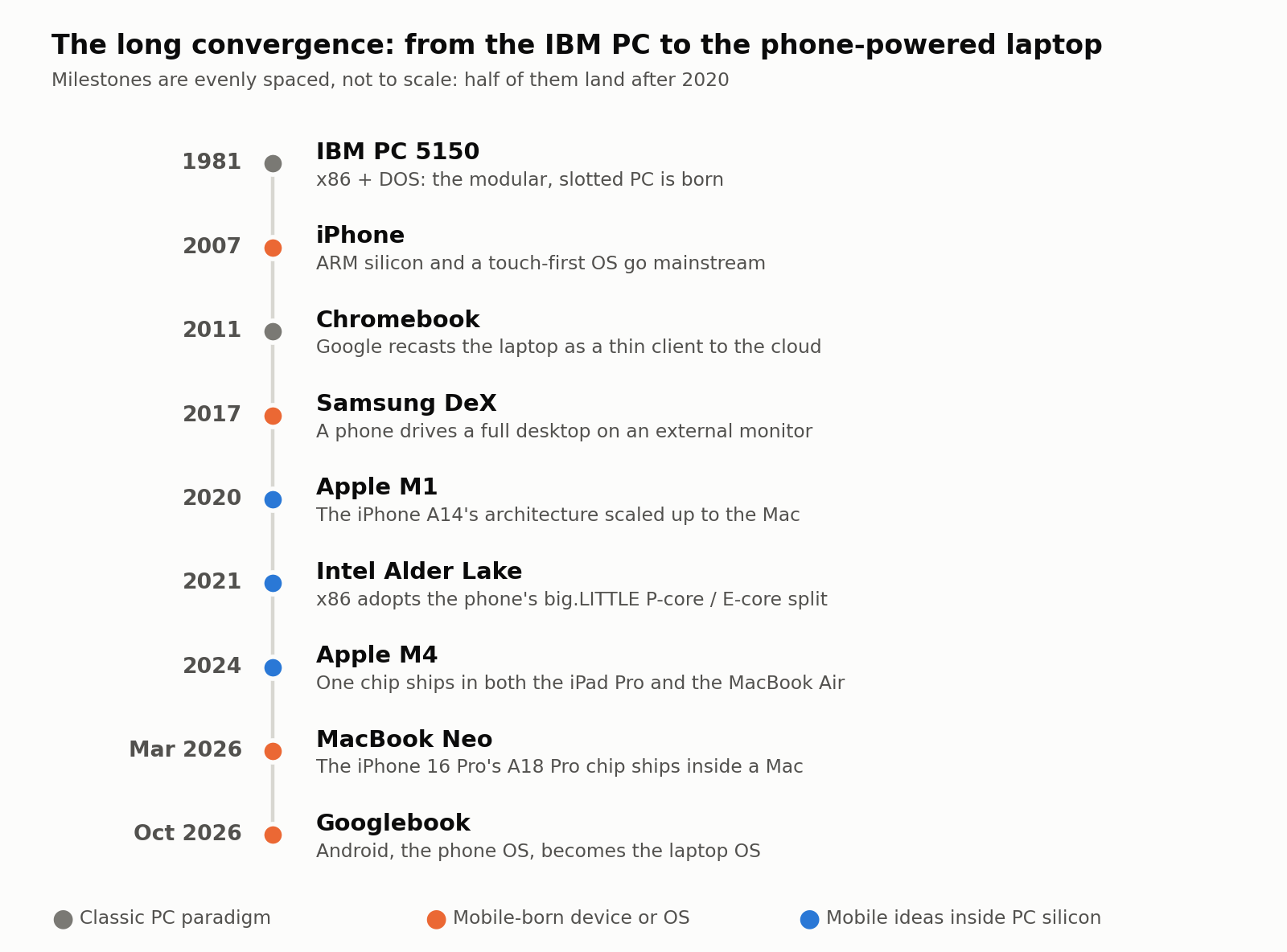
The Separate Worlds (1981 to 2016)
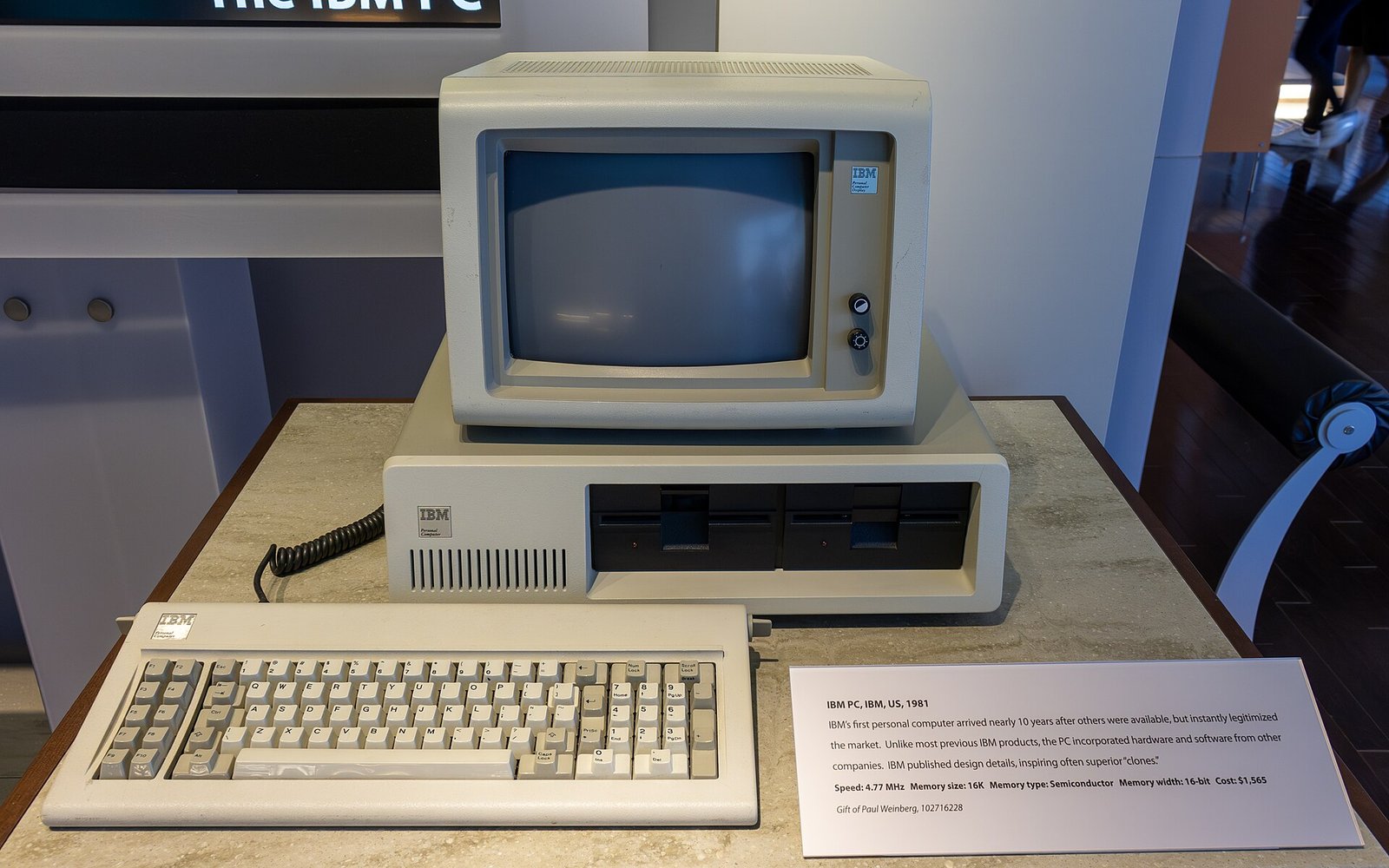
The IBM PC of 1981 set the template that lasted four decades: an x86 processor, slotted memory, expansion cards, and an operating system that assumed unlimited power from the wall. The iPhone of 2007 set the opposite template: an ARM system-on-a-chip, soldered memory, a sealed case, and an operating system that treated every milliwatt as precious.
For years the two worlds only touched at the edges. The Chromebook borrowed the phone's simplicity but kept x86 and leaned on the cloud. Samsung DeX (2017) let a Galaxy phone drive a full desktop monitor, a striking demo that never went mainstream.
The Silicon Turn (2020 to 2024)
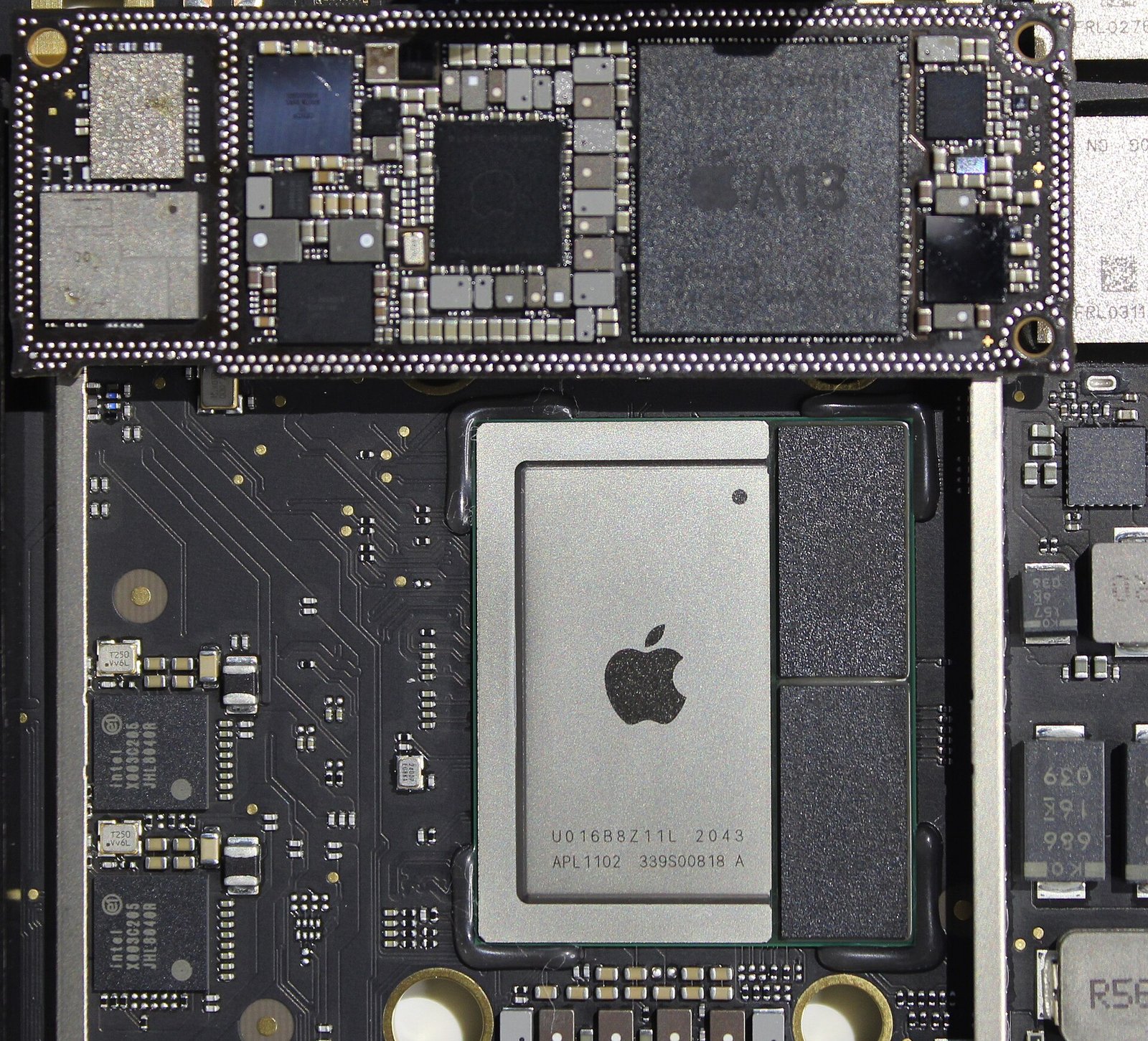
Then Apple flipped the table. The M1 (2020) was built from the same CPU core designs as the iPhone 12's A14, scaled up with more cores, more GPU and more memory. Overnight, the Mac became a very large iPhone system-on-a-chip.
Intel answered in 2021 with Alder Lake, which brought the phone's big.LITTLE idea to x86: fast Performance cores and frugal Efficiency cores on one die. That idea has shaped every Intel laptop chip since, up to Panther Lake's three tiers of cores in the 2026 Googlebooks.
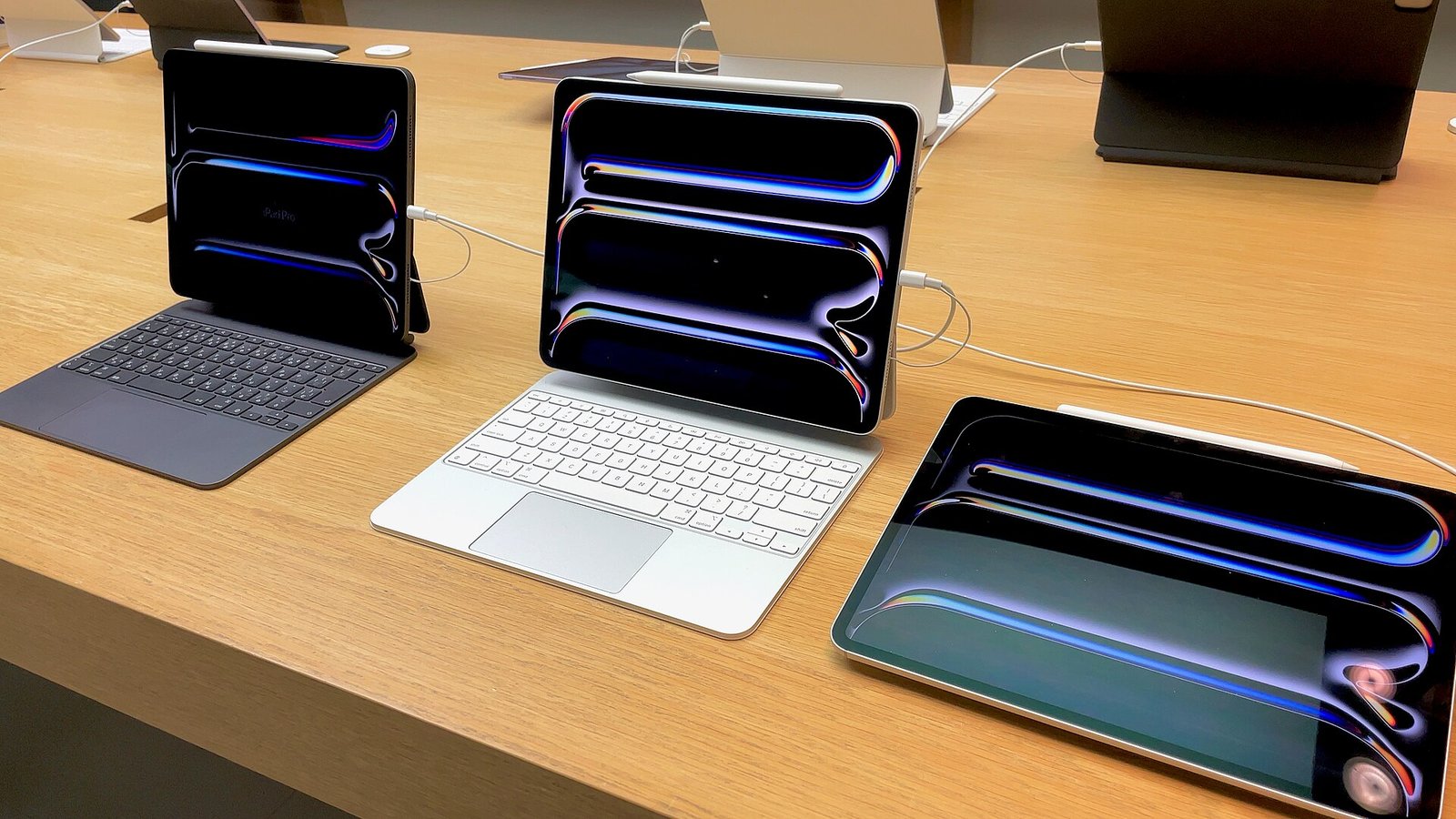
By 2024, Apple's M4, built on second-generation 3nm with 28 billion transistors, shipped as the same die in both the iPad Pro and the MacBook Air, differing only in how many cores each model enables. A tablet and a laptop now ran on the same chip. From there, putting a phone's chip in a Mac was one short step.
Here is where the three lineages stand today: a phone chip, a tablet-and-laptop chip, and x86's most mobile-minded design.
| Architecture Feature | Apple A18 Pro (MacBook Neo) | Apple M4 (Base) | Intel Core Ultra X9 388H (Panther Lake) |
|---|---|---|---|
| Born in | iPhone 16 Pro | iPad Pro, then MacBook Air | Laptops |
| Instruction Set | ARMv9 (RISC) | ARMv9.2a (RISC) | x86-64 (CISC) |
| Manufacturing Node | TSMC 3nm (N3E) | TSMC 3nm (Second Gen) | Intel 18A / TSMC N3E |
| CPU Cores | 6 (2P + 4E) | 10 (4P + 6E) | 16 (4P + 8E + 4LPe) |
| NPU AI Performance | 35 TOPS | 38 TOPS | ~50 TOPS |
| Max Memory Bandwidth | 60 GB/s | 120 GB/s | Up to ~153 GB/s |
A chip designed for a phone sits in the same table as two laptop processors, and it belongs there. Note the bottom rows, too: every one of them carries a neural engine. NPUs landed in phones first, for photography, voice and face unlock. Laptops did not invent them. They inherited them.
Part III: Under the Hood
3.1 Inside the Pipeline: Why the Decoder Decided the War
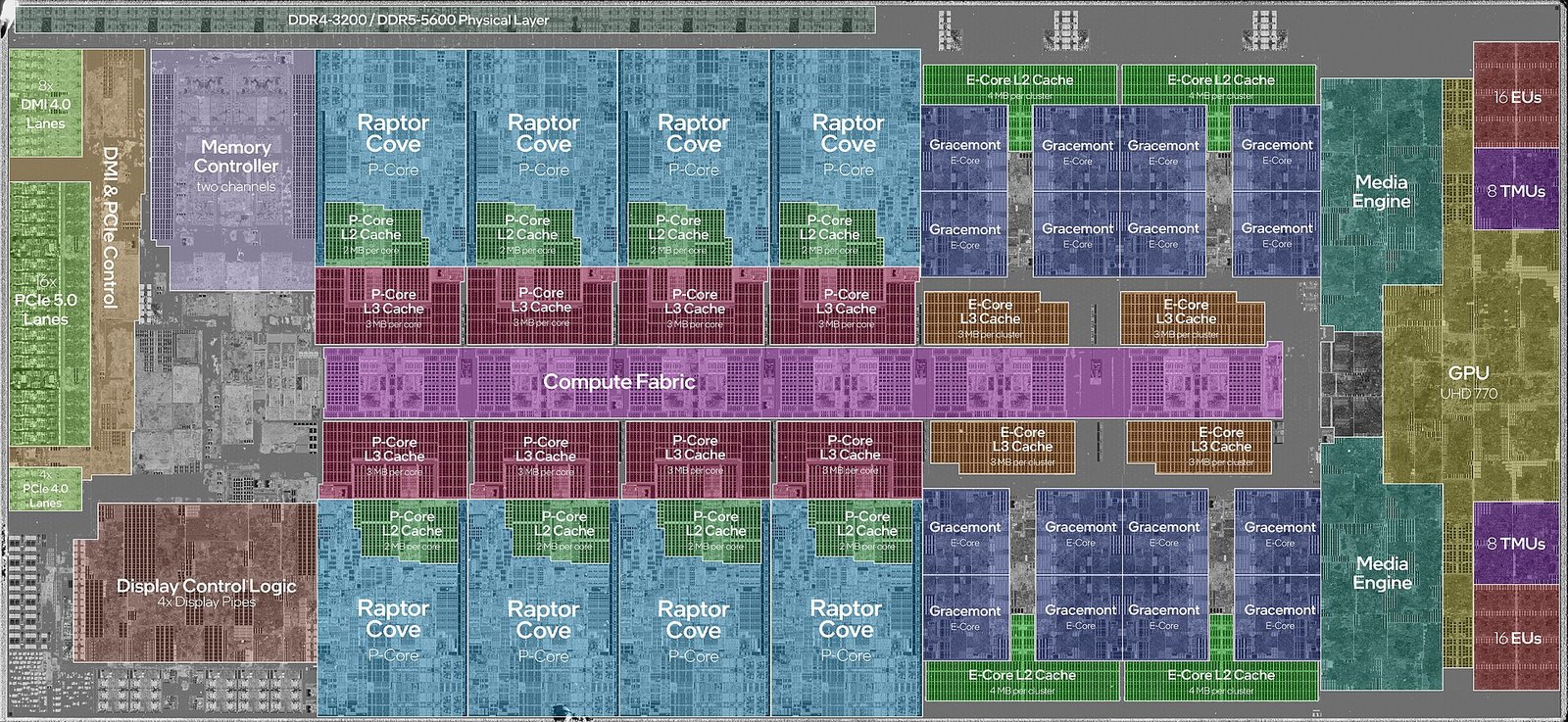
How can a phone chip run a Mac? The answer lies in the processor's front end, where instructions are fetched and decoded. This is where the war was settled.
x86 was born when memory was absurdly expensive, so its instructions were made dense and complex: anywhere from 1 to 15 bytes long, able to load, compute and store in one go. In 1978 that was a brilliant trade. In 2026 it is a tax that never stops being collected. Because instruction lengths vary, the core cannot even tell where one instruction ends and the next begins without real work. It has to speculatively decode across byte boundaries before it can produce the uniform micro-operations (µops) the back end executes. That burns power, makes heat and eats die area. Worse, if the decoder cannot keep up, the whole core starves: a world-class execution engine sits idle, waiting for the front end to find the last instruction boundary.
ARM took the opposite route: a fixed-length, reduced instruction set. Every instruction is the same width, so boundaries are known in advance and wide parallel decode is cheap, a matter of slicing the fetch block into equal pieces. That is what makes the very wide decoders in the A18 Pro and M4 performance cores practical. ARM's load/store design and large register file also take pressure off memory bandwidth.
This is why the MacBook Neo is possible at all. Two A18 Pro performance cores, built for a phone's power budget, come close to the M4 in single-threaded speed. Intel's Panther Lake shows x86 can still be efficient, but it got there by borrowing the phone's P-core and E-core layout, while still carrying decades of legacy compatibility that burns power and does nothing for the user. ARM's efficiency was forged in a sealed glass slab with no fan and a battery the size of a cracker. That turned out to be exactly the right training ground for the thin-and-light laptop.
3.2 Memory: The Day the DIMM Slot Died
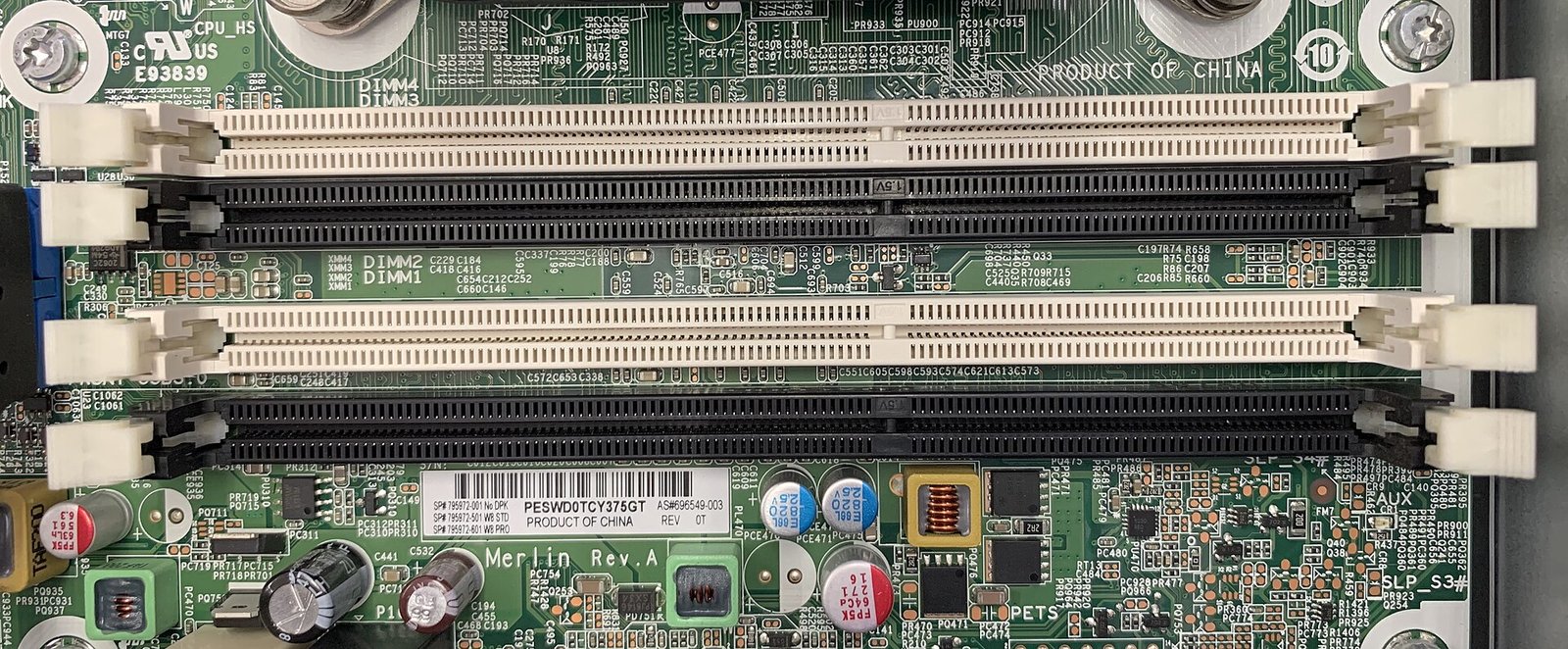
If you want a single place where mobile beat the PC, it is not the CPU. It is memory.
For most of PC history, a computer had two separate memory pools: DDR system RAM for the CPU and GDDR VRAM on the graphics card. Whenever the GPU needed data, it had to be copied out of system RAM, across the PCIe bus, and into VRAM. That copy tax added latency, stranded capacity in two pools that could not share, and burned power moving bytes back and forth.
Phones never paid it. With no room for two memory systems, they have always used unified memory: the CPU, GPU and NPU all share the same physical memory. Apple scaled that phone design up to the Mac, with on-package LPDDR5X delivering 120 GB/s on the base M4 and 546 GB/s on the full M4 Max. Panther Lake Googlebooks follow the same path with LPDDR5X-9600 at about 153 GB/s, and LPDDR itself is a mobile-born standard. The MacBook Neo is the purest case: its 8GB sits on the A18 Pro package exactly as it does in the iPhone 16 Pro, at 60 GB/s. There is nothing to upgrade, because memory is part of the chip.
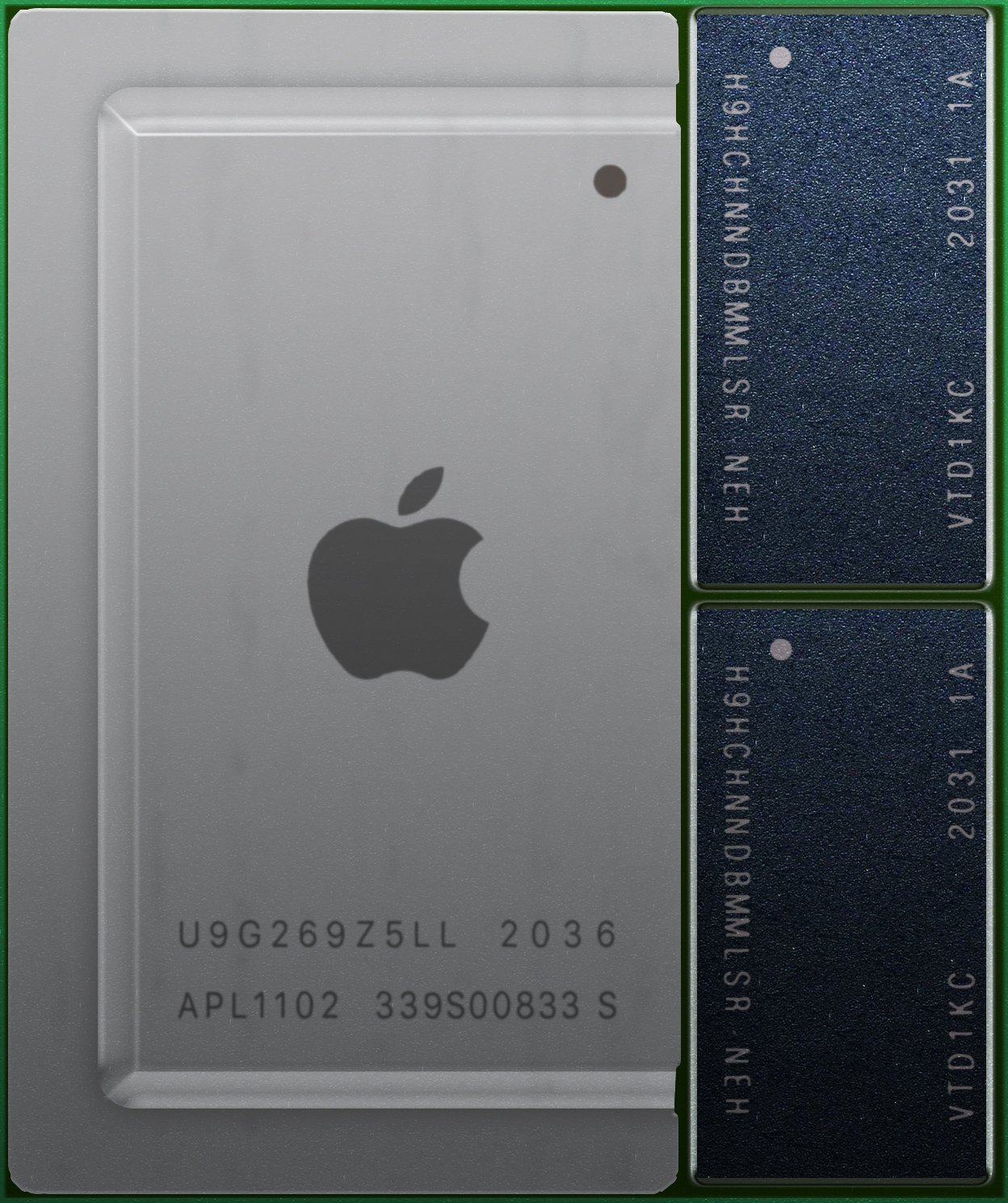
This is the critical enabler of the AI PC. Large language models are brutally memory-bound. A 70-billion-parameter model at 4-bit quantization needs roughly 35 to 43GB for its weights. An NVIDIA RTX 5090, the most expensive consumer graphics card there is, is capped at 32GB of VRAM. A unified-memory Mac with 64GB or 128GB can hand roughly three-quarters of its pool to the GPU by default on high-memory models, and hold the whole model. A laptop with no discrete GPU runs what the flagship gaming card cannot fit. The Neo's 8GB is built for small on-device models, not 70B ones, but it uses the same architecture, which scales from 8GB to 128GB without changing its nature.
The PC gave up slotted, upgradeable RAM for integrated, high-bandwidth unified memory. That is not a compromise. It is a surrender to smartphone design principles, and it was the right call.
3.3 Operating Systems: Mobile Took the Throne
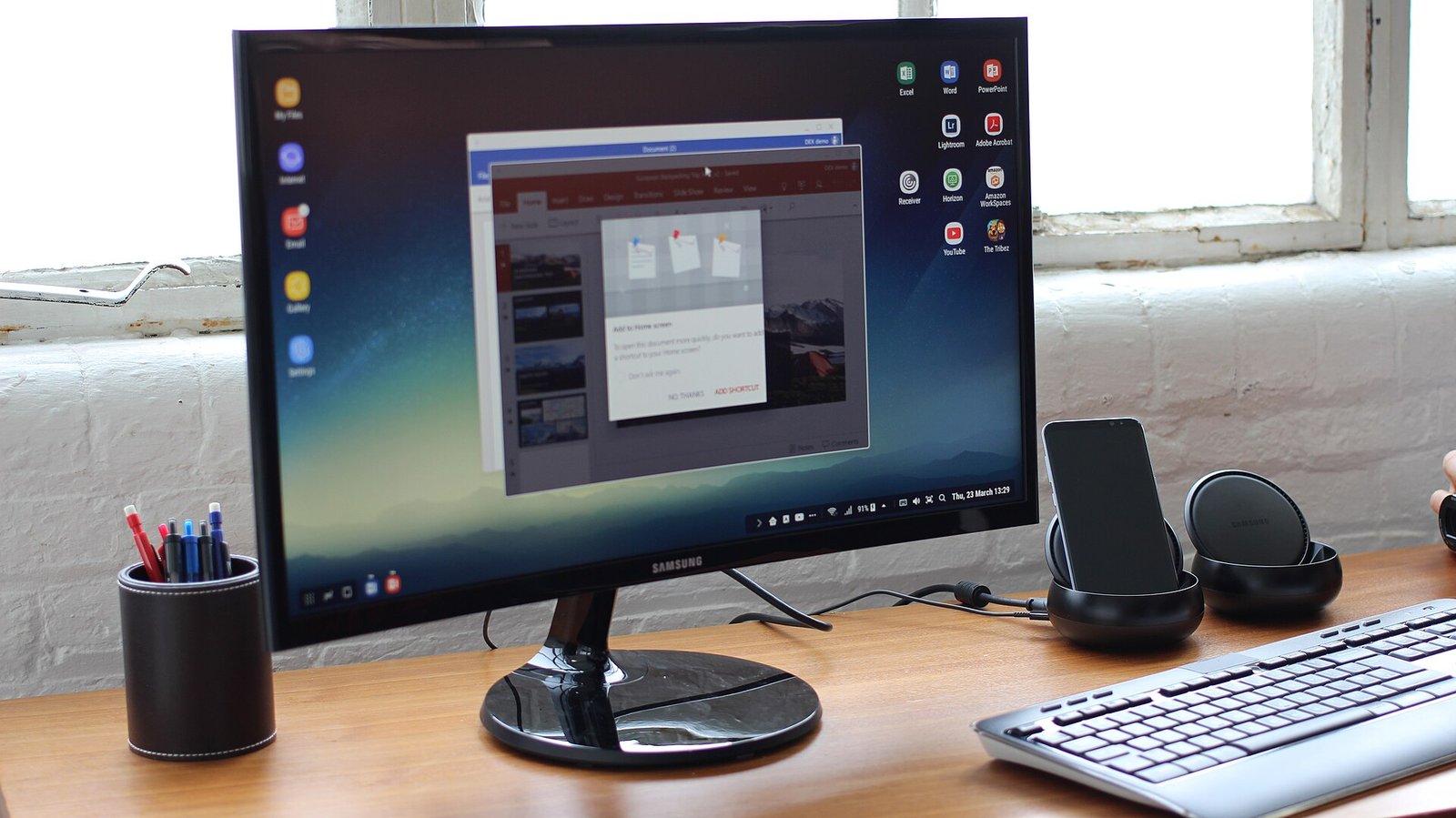
Desktop operating systems were built for plenty: wall power, free-running background processes, sprawling file systems. Mobile operating systems were built for scarcity: strict sandboxing, aggressive battery management, and freezing anything the user is not looking at. Scarcity-first design has now conquered the desktop.
Start with the kernels. Android and Googlebook OS share Linux; iOS and macOS share Apple's hybrid XNU kernel. The kernel inside your phone is the kernel inside your laptop. With the MacBook Neo, Apple goes further: the same chip runs the same kernel in the iPhone 16 Pro and the Mac, and Apple silicon Macs run iPhone and iPad apps natively wherever developers allow it.
The sharpest difference between the two camps is memory management, and the two 2026 machines show it in their spec sheets. Android runs apps on a runtime with garbage collection, which periodically scans memory for unused objects and needs a large pool of free RAM to avoid stutters. When that runs out, Android's low-memory killer ends background apps. That is why the Pixel 9 ships with 12GB and the Pixel 9 Pro with 16GB, and why every Googlebook starts at 16GB.
Apple uses Automatic Reference Counting (ARC), which the compiler builds directly into Swift and Objective-C code. Objects are freed the instant nothing references them, with no scan, no pause and no big free buffer. On top of that, macOS compresses cold memory in place instead of paging it to disk. That is the hidden reason the MacBook Neo can ship with just 8GB, the same as the iPhone 16 Pro, and reviewers mostly found it adequate. Neither approach came from the desktop. Both were refined under the memory pressure of the smartphone.
The screen tells the same story. Googlebook OS draws its windows with SurfaceFlinger, Android's compositor, not the X11 or Wayland stacks of the traditional Linux desktop. It was designed for smooth, tear-free touch interfaces on phones, and it is now being stretched to run overlapping desktop windows, seams and all.
3.4 The Translation Layer: Burying x86's Past
Every architecture change leaves a ghost: legacy code compiled for the old world. In 2026, the revealing thing is which direction that ghost now points.
Rosetta 2 made Apple's jump from Intel to ARM almost painless. It translates x86 apps to ARM ahead of time, and Apple went further by changing the silicon itself. x86 enforces a strict memory-ordering model called Total Store Ordering (TSO), which is very expensive to emulate in software. So Apple built hardware TSO support into its M-series chips, which switch into Intel-style memory ordering when running translated code. Translated apps run at close to native speed.
And now Apple is shutting it down. macOS 27 drops Intel Macs entirely and is the last release with general-purpose Rosetta 2; early reports say the installer even removes it by default. With macOS 28 in 2027, only a subset will remain for older, unmaintained games. The bridge back to x86 is being demolished.
The Googlebook faces the same ghost from the other direction. Most native Android apps are compiled for ARM. On the Snapdragon Googlebooks from Dell and HP, they run natively. On the Intel models from Acer, ASUS and Lenovo, they have to go through libhoudini, Intel's ARM-to-x86 translator, which relies on just-in-time translation and brings overhead, battery drain and compatibility problems for complex apps and games. The x86 PC is now the one that needs a translator.
Put the two stories together: Apple is deleting its x86 compatibility, and Google's x86 laptops have to emulate the phone. Either way, the phone's instruction set is the reference now.
Part IV: Above the Hardware
4.1 The Universal Abstraction: WebAssembly and WebGPU

So far this has been a fight over silicon and kernels. But a deeper revolution is underway that makes the whole fight start to look beside the point. The browser has become a universal operating system, powered by two W3C technologies: WebAssembly (Wasm), a finished standard, and WebGPU, still a Candidate Recommendation but already shipping in Chrome, Edge, Firefox and Safari.
WebAssembly: Native Speed, Anywhere
WebAssembly is a low-level binary instruction format that runs in a sandboxed virtual machine inside the browser. Developers compile C++, Rust, Go and Kotlin to Wasm, and the browser runs it at near-native speed. Because Wasm skips JavaScript's parse-and-optimize path, it can handle heavy CPU work such as cryptography, video editing and physics simulation entirely on the client.
The WebAssembly Component Model and the WebAssembly System Interface (WASI) push Wasm beyond the browser. WASI provides a secure, deny-by-default, standardized interface for reaching the host's file system and network resources safely. The same Wasm module can run on an x86 Windows laptop, a cloud server or an ARM phone without being recompiled.
Read that again. Write once, run on any instruction set. The ARM vs. x86 war, fought so fiercely in the decoders, gets abstracted away one layer up.
WebGPU: The Graphics Card, Unlocked
WebGPU, the modern successor to WebGL, is a low-level graphics and compute API that gives web apps direct, platform-independent access to the GPU. Like Vulkan or Apple's Metal, it offers explicit control over rendering pipelines and, crucially, compute shaders. That brings general-purpose GPU computing (GPGPU) into the browser, including AI inference and complex 3D rendering, with nothing to install.
The Combined Blow
Put them together and you get something genuinely disruptive. Route parallel work through WebGPU and complex serial logic through WebAssembly, and an app delivered by a single URL can rival a native desktop executable. Profiling shows Rust compiled to Wasm running at near-native microsecond latencies, while WebGPU sustains 60 frames per second with a small memory footprint.
For the Googlebook, which keeps the full desktop Chrome browser on top of Android, this is the bridge that lets a phone OS run serious desktop-class web software. For the MacBook Neo, it means a phone chip can run the same web apps as a workstation.
The OS becomes a launcher. The ISA becomes an implementation detail. The URL becomes the installer.
4.2 Cross-Platform Frameworks: The Native Divide Collapses
When the browser runs at native speed and compilers target every architecture, the line between mobile apps, web apps and desktop apps starts to disappear. A new generation of frameworks takes advantage of exactly that, aiming one codebase at every device at once.
| Framework | Primary Language | UI Rendering Strategy | Target Platforms | Key Strengths |
|---|---|---|---|---|
| Flutter | Dart | Custom Rendering Engine | iOS, Android, Web, Desktop | Pixel-perfect UI consistency, massive ecosystem |
| Kotlin Multiplatform | Kotlin | Native UI or Compose | iOS, Android, Web, Desktop | Shared business logic with true native UI performance |
| Uno Platform | C# / .NET | Native UI or Skia | iOS, Android, Web (WASM), Desktop | Production-ready WebAssembly, WinUI compatibility |
| .NET MAUI | C# / .NET | Native Controls | iOS, Android, Windows, macOS | Deep Microsoft ecosystem integration |
Kotlin Multiplatform (KMP), from JetBrains, lets developers share business logic across Android, iOS, Windows, macOS and the web while keeping native performance. With Compose Multiplatform, they can now share up to 100% of their code, UI included, across every form factor. Think about what that means for the Googlebook. The army of mobile-first Kotlin developers, raised on Android, now targets the laptop by default. The PC's developer base is being absorbed by the mobile one.
Flutter, Google's Dart-based framework, goes further by skipping native UI toolkits entirely. It paints every pixel with its own high-performance rendering engine. An app looks identical on an iPhone, a Googlebook or an embedded IoT screen.
Add Uno Platform, which offers production-ready WebAssembly deployment and pixel-perfect Skia rendering across six platforms, and the case for bespoke, platform-specific desktop apps shrinks fast. Flutter's Wasm output is heavily tuned for Chromium-based browsers, while Uno targets Wasm across Chrome, Edge, Firefox and Safari. Together they make the browser the most important deployment platform there is.
Part V: The Money
5.1 Market Dynamics: The AI PC Boom and Economic Reality
None of this is a technical curiosity. It is a massive economic shift, driven by demand for local AI and by turbulence in memory costs.
Gartner forecasts worldwide IT spending reaching $6.37 trillion in 2026, up 14.2%, driven by aggressive data center buildouts and a large hardware refresh cycle at the endpoint.
Inside that tide, the NPU has become the PC's new reason to exist. Gartner defines an AI PC as a PC with an embedded NPU, covering Windows on ARM, macOS on ARM and x86 Windows machines. Googlebooks, every one of which ships with an NPU, fit the same mold. Shipments are projected to jump from 77 million units in 2025 to 143 million in 2026.
| Year | Total AI PC Units (Thousands) | AI PC Share of Total PC Market (%) | AI Laptop Share of Laptop Market (%) |
|---|---|---|---|
| 2024 | 38,145 | 15.6% | 19.4% |
| 2025 | 77,792 | 31.0% | 35.7% |
| 2026 | 143,113 | 54.7% | 58.7% |
By the end of 2026, AI PCs are expected to make up 54.7% of the entire worldwide PC market and 58.7% of laptops. In three years the NPU went from novelty to majority. Gartner goes further and predicts that by 2026, AI laptops will be "the only choice of laptop available to large businesses," up from less than 5% in 2023.
The engine of this adoption is local small language models (SLMs). Enterprises are moving away from cloud-only AI because of latency, rising API costs and serious data privacy concerns. Running SLMs on the device keeps data local and responses instant. By the end of 2026, Gartner expects 40% of software vendors to prioritize investment in AI capabilities directly on PCs, up from just 2% in 2024.
The Phone-Chip Price Weapon
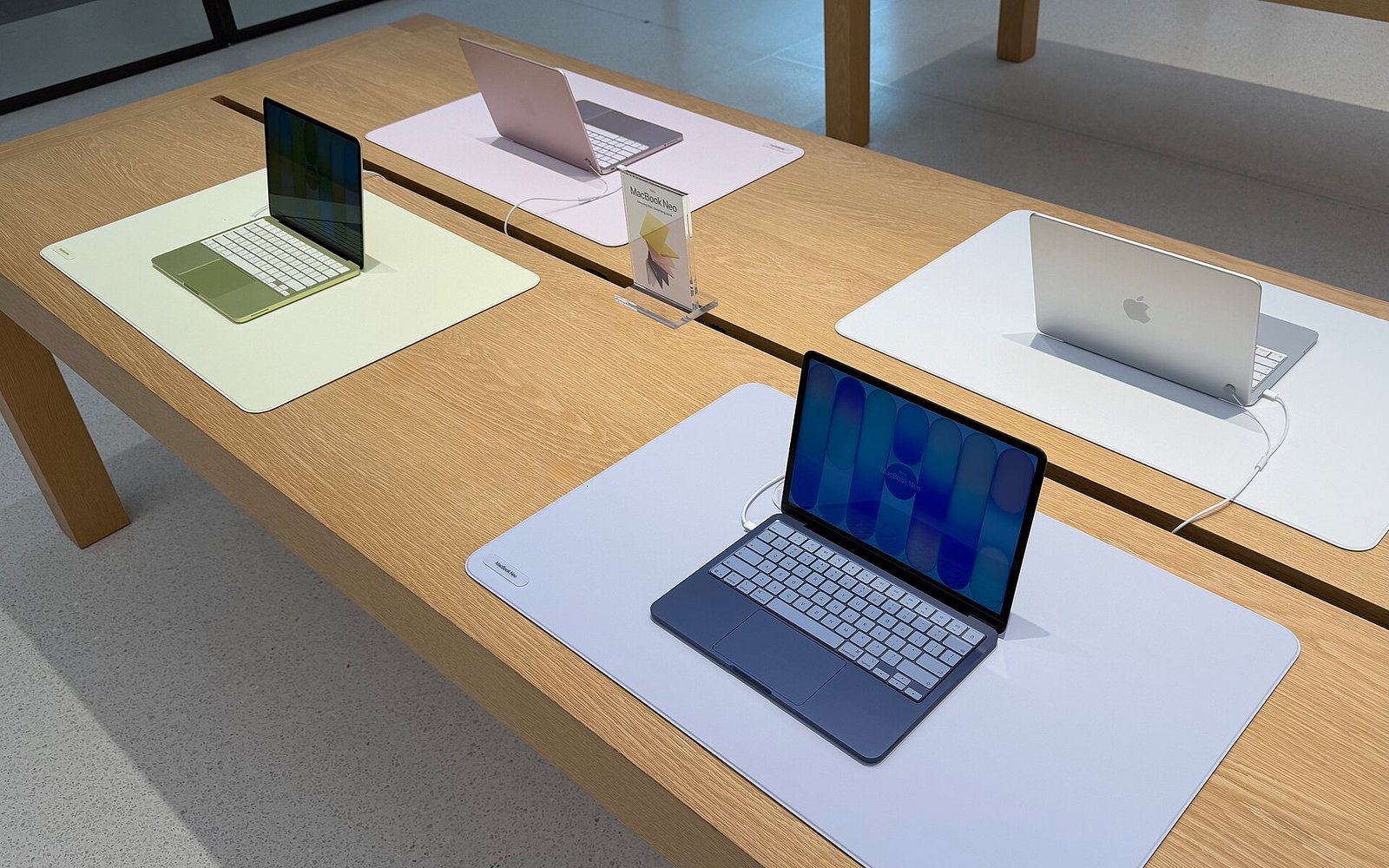
The MacBook Neo shows what phone silicon does to PC economics. Apple already makes A18 Pro chips by the tens of millions for iPhones. Reusing them, including binned dies with a disabled GPU core, lets Apple sell a Mac at $599, with an NPU and a fanless aluminum body, below the price of most Windows AI laptops. The Googlebook, built on laptop chips, starts at $899. The cheapest AI PC in this fight is the one with a phone inside it.
The Paradox: ARM Wins the War, x86 Keeps the Territory
There is a twist. Despite ARM's clear architectural edge, ARM PCs were projected to stay below roughly 13% market share through 2025. How?
Because x86 survived by becoming mobile. Intel adopted the phone's design philosophy, with hybrid P-core and E-core layouts, low-power islands, integrated NPUs and on-package LPDDR5X, and in doing so blocked ARM's most obvious path to total domination. Three of the five launch Googlebooks run Intel chips. ARM may not win the logo on the box. But the ideas inside the box are mobile through and through.
Meanwhile, an AI-driven DRAM and NAND shortage is squeezing the consumer market. Gartner estimates memory and SSD prices up about 130% and average PC prices up 17%, and forecasts 2026 PC shipments down 10.4%, with budget and consumer PCs hit hardest. Even the MacBook Neo was not immune. On June 25, 2026, Apple raised both Neo models by $100, to $699 and $799, blaming a memory-chip shortage driven by AI-server demand: "We have never seen a component price increase this much, this quickly". The traditional bargain-bin PC is effectively disappearing, replaced by premium, highly integrated laptops built like phones. The cheap, modular, upgradeable PC is not being out-competed. It is being priced out of existence.
Conclusion: The Phone Didn't Replace the PC, It Became It
So, is mobile eating the PC?
No. Mobile has already eaten it. We are just reading the obituary.
The proof is in two machines from 2026. The MacBook Neo runs on the A18 Pro, a chip designed for the iPhone 16 Pro, with a phone's 8GB of memory and a phone's fanless thermal design, and it does nearly everything most people need from a laptop. The Googlebook runs on Android, the operating system of more than three billion devices, with the Chrome browser and a Linux terminal layered on top. One took the phone's body chemistry; the other took its mind.
They are the end point of a forty-year story. The IBM PC built a world of slots, sockets and x86. The iPhone built a parallel world of SoCs, ARM and scarcity. Then the parallel lines bent toward each other. The M1 carried iPhone cores into the Mac. Alder Lake carried the phone's big.LITTLE design into x86. The M4 shipped unchanged in a tablet and a laptop. Panther Lake made three tiers of phone-style cores the top of Intel's range. And in 2026 the lines finally met: a phone chip in a Mac, and a phone OS on a laptop.
Every layer tells the same story. The modern laptop's defining traits were forged in the crucible of smartphone constraints: decode-efficient instruction pipelines, unified on-package LPDDR5X, dedicated neural engines, and a flat refusal to pay the PCIe copy tax. The operating systems followed, with memory managed by ARC and compression or by Android's runtime, rendered by a phone's compositor, and sandboxed like an app store. Apple is deleting its x86 bridge with macOS 27 and 28. Google's Intel laptops need a translator to run the phone's native code. And above it all, WebAssembly, WebGPU, Kotlin Multiplatform and Flutter mean developers write once and ship everywhere, so the underlying OS and instruction set are increasingly demoted to the role of hypervisor.
The PC as a distinct, unconstrained, modular computing paradigm is finished. In its place stands a synthesis no one quite planned: the desktop form factor, driven by the relentless, efficient, unified heartbeat of mobile architecture.
The phone did not replace the PC. Apple gave it the phone's brain. Google gave it the phone's soul. The phone became the PC.
References
- Why Google's forgotten Pixelbook Go is still my favorite laptop in 2026, https://www.androidpolice.com/googles-forgotten-pixelbook-go-still-favorite-laptop-in-2026/
- REVIEW: Google Pixelbook Go in 2026 - Yes, Android ... - YouTube, https://www.youtube.com/watch?v=FFXWDHdxNx8
- Googlebook OS - Wikipedia, https://en.wikipedia.org/wiki/Googlebook_OS
- Google confirms it's 'combining' Chrome OS and Android ... - Reddit, https://www.reddit.com/r/google/comments/1lzikpp/google_confirms_its_combining_chrome_os_and/
- Google's new laptop OS is Android, ChromeOS and Linux mashed, https://www.notebookcheck.net/Google-s-new-laptop-OS-is-Android-ChromeOS-and-Linux-mashed-into-one.1404958.0.html
- Google to merge Chromebooks with Android - Adafruit Blog, https://blog.adafruit.com/2025/12/23/google-to-merge-chromebooks-with-android/
- Googlebook Launches with Intel Core Ultra Series 3 Processors, https://www.intel.com/content/www/us/en/newsroom/news/client-computing/googlebook-launches-with-intel-core-ultra-series-3-processors.html
- Pixel Laptop: Return of Google laptops confirmed with Googlebooks, https://www.notebookcheck.net/Pixel-Laptop-Return-of-Google-laptops-confirmed-with-Googlebooks-launching-this-fall.1294854.0.html
- The Googlebook era is here: some first impressions of the hardware, https://chromeunboxed.com/the-googlebook-era-is-here-some-first-impressions-of-the-hardware-and-a-whole-new-os/
- Introducing Googlebook, designed for Gemini Intelligence, https://blog.google/products-and-platforms/platforms/android/meet-googlebook/
- Googlebook Laptops, Designed for Gemini Intelligence - Google Store, https://store.google.com/category/laptops?hl=en-US
- Apple M4 - Wikipedia, https://en.wikipedia.org/wiki/Apple_M4
- Apple M4 (10 cores) Processor - Benchmarks and Specs, https://www.notebookcheck.net/Apple-M4-10-cores-Processor-Benchmarks-and-Specs.835975.0.html
- Apple introduces M4 chip, https://www.apple.com/newsroom/2024/05/apple-introduces-m4-chip/
- Panther Lake (microprocessor) - Wikipedia, https://en.wikipedia.org/wiki/Panther_Lake_(microprocessor)
- Intel Core Series 3 Processors for the Edge (codenamed Wildcat Lake), https://www.intel.com/content/www/us/en/content-details/917657/intel-core-series-3-processors-for-the-edge-codenamed-wildcat-lake-overview.html
- Intel Core Series 3 (Wildcat Lake) CPU at Hot Chips 2026, https://www.servethehome.com/intel-core-series-3-wildcat-lake-cpu-at-hot-chips-2026/
- The complete list of Intel Panther Lake laptops (Core Ultra X9 388H), https://www.ultrabookreview.com/74624-intel-panther-lake-laptops/
- Apple M4 chip AI performance explained - Mayhemcode, https://www.mayhemcode.com/2026/05/apple-m4-chip-ai-performance-explained.html
- ARM vs x86 Explained: What Every Developer Should Know - Medium, https://medium.com/@TechStoryLines/arm-vs-x86-explained-what-every-developer-should-know-f0a461603656
- Performance Debugging through Microarchitectural Sensitivity, https://arxiv.org/html/2412.13207v1
- Improving Instruction Fetch Efficiency via High-Level Program Map, https://arxiv.org/pdf/2406.06738
- Why Arm is more efficient than x86 - r/ElectricalEngineering, https://www.reddit.com/r/ElectricalEngineering/comments/1w3v6be/why_arm_is_more_efficient_than_x86/
- X86 vs ARM decoder impact in efficiency - r/hardware, https://www.reddit.com/r/hardware/comments/1i4a7b2/x86_vs_arm_decoder_impact_in_efficiency/
- Pipeline overview - Cortex-M85 - Arm Developer, https://support.arm.com/documentation/107950/0100/Overview/Pipeline-overview
- Introducing the Arm-membench Throughput Benchmark - arXiv, https://arxiv.org/html/2504.06813v1
- Apple Unified Memory vs RTX GPUs For LLMs - Mayhemcode, https://www.mayhemcode.com/2026/06/apple-unified-memory-vs-rtx-gpus-for.html
- What is LPDDR Memory and Unified Memory - SabrePC Blog, https://www.sabrepc.com/blog/computer-hardware/what-is-lpddr-memory-and-unified-memory
- What are the RAM specifications for the M4 MacBook? - Apple Community, https://discussions.apple.com/thread/255888747
- LPDDR5X Vs LPDDR5: Data Rate, Latency And Power Efficiency, https://eureka.patsnap.com/report-lpddr5x-vs-lpddr5-data-rate-latency-and-power-efficiency
- Microkernel vs. Monolithic Kernel - GeeksforGeeks, https://www.geeksforgeeks.org/operating-systems/difference-between-microkernel-and-monolithic-kernel/
- Research paper: microkernel vs monolithic kernel - ResearchGate, https://www.researchgate.net/publication/385879846_Research_paper_microkernel_vs_monolithic_kernel
- Why M1 Macs are more efficient with memory - Hacker News, https://news.ycombinator.com/item?id=25204401
- Does Android use more memory than iOS? - Android Authority, https://www.androidauthority.com/android-ios-ram-memory-usage-744848/
- Android vs iOS RAM management - Who does it better? - r/Android, https://www.reddit.com/r/Android/comments/smqger/android_vs_ios_ram_management_who_does_it_better/
- ARM MTE Performance in Practice (Extended Version) - arXiv, https://arxiv.org/html/2601.11786v1
- SurfaceFlinger and WindowManager - Android Open Source Project, https://source.android.com/docs/core/graphics/surfaceflinger-windowmanager
- Windowing system - Wikipedia, https://en.wikipedia.org/wiki/Windowing_system
- Google (or Googlebook) has desktop OS problem - r/google_book, https://www.reddit.com/r/google_book/comments/1tqeerb/googleor_googlebook_has_desktopos_problem/
- Support 64-bit architectures - Android Developers, https://developer.android.com/google/play/requirements/64-bit
- Google says the vast majority of Android apps run fine on ... - r/Android, https://www.reddit.com/r/Android/comments/1wy8fu7/google_says_the_vast_majority_of_android_apps_run/
- Technical discussion on ARM translation - Hacker News, https://news.ycombinator.com/item?id=11733050
- Frida-server on Android x86 running libhoudini.so - GitHub, https://github.com/frida/frida/issues/1567
- ChromeOsAbiSupport: Missing ABI Support for ChromeOS, https://googlesamples.github.io/android-custom-lint-rules/checks/ChromeOsAbiSupport.md.html
- Why is Rosetta 2 fast? - dougallj, https://dougallj.wordpress.com/2022/11/09/why-is-rosetta-2-fast/
- Rosetta 2 on a Mac with Apple silicon - Apple Platform Security, https://support.apple.com/zh-hans/guide/security-pdf/secebb113be1/web
- Rosetta 2 hardware acceleration discussion - Hacker News, https://news.ycombinator.com/item?id=45738816
- How x86 to arm64 Translation Works in Rosetta 2 - InfoQ, https://www.infoq.com/news/2020/11/rosetta-2-translation/
- WebAssembly and WebGPU: High-Performance Computing on the Web - Medium, https://tianyaschool.medium.com/webassembly-and-webgpu-high-performance-computing-on-the-web-a1a389a9f392
- WebAssembly: A new development paradigm for the web - YouTube, https://www.youtube.com/watch?v=RcHER-3gFXI
- Kotlin/Wasm - Kotlin Documentation, https://kotlinlang.org/docs/wasm-overview.html
- Is the Web Browser the Most Important Platform for App Development? - DEV, https://dev.to/uno-platform/is-the-web-browser-the-most-important-platform-for-app-development-19el
- What's Up With WebAssembly: Compute's Next Paradigm Shift - Sapphire Ventures, https://sapphireventures.com/blog/whats-up-with-webassembly-computes-next-paradigm-shift/
- WebGPU Paradigm Shift - YouTube, https://www.youtube.com/watch?v=ESAanme_AmE
- WebAssembly and WebGPU for High-Performance Web and Mobile Apps - Krify, https://krify.com/the-use-of-web-assembly-wasm-and-web-gpu-for-high-performance-web-and-mobile-apps/
- The Seven Most Popular Cross-Platform App Development Frameworks - Kotlin, https://kotlinlang.org/docs/multiplatform/cross-platform-frameworks.html
- Top Cross-Platform App Development Frameworks in 2026 - Bolder Apps, https://www.bolderapps.com/blog-posts/top-cross-platform-app-development-frameworks-in-2026
- 5 Best Cross Platform Frameworks for App Dev in 2026 - Uno Platform, https://platform.uno/articles/best-cross-platform-frameworks-2026/
- Gartner Forecasts Worldwide IT Spending to Grow 14.2% in 2026, https://www.gartner.com/en/newsroom/press-releases/2026-07-27-gartner-forecasts-worldwide-it-spending-to-grow-14-point-2-percent-in-2026-totaling-6-point-37-trillion
- Gartner Says AI PCs Will Represent 31% of Worldwide PC Market by the End of 2025, https://www.gartner.com/en/newsroom/press-releases/2025-08-28-gartner-says-artificial-intelligence-pcs-will-represent-31-percent-of-worldwide-pc-market-by-the-end-of-2025
- Gartner Forecasts Worldwide Shipments of AI PCs to Account for 43% of All PCs in 2025, https://www.gartner.com/en/newsroom/press-releases/2024-09-25-gartner-forecasts-worldwide-shipments-of-artificial-intelligence-pcs-to-account-for-43-percent-of-all-pcs-in-2025
- 2025 will see AI PCs become the new normal, but Arm-based PCs will not grow out of their minority segment - ABI Research, https://abiresearch.com/press/2025-will-see-ai-pcs-become-the-new-normal-but-arm-based-pcs-will-not-grow-out-of-its-minority-segment
- MacBook Neo - Wikipedia, https://en.wikipedia.org/wiki/MacBook_Neo
- MacBook Neo is official for $599: specs, colors and latest news - Tom's Guide, https://www.tomsguide.com/computing/macbooks/macbook-neo-is-official-for-usd599-specs-colors-and-latest-news
- MacBook Neo arrives with A18 Pro chip, $599 starting price - GSMArena, https://m.gsmarena.com/macbook_neo_arrives_with_a18_pro_chip_599_starting_price-amp-71808.php
- MacBook Neo Review - MacRumors, https://macrumors.com/review/macbook-neo/
- First benchmarks for MacBook Neo and MacBook Pro 2026 - heise online, https://www.heise.de/en/news/First-benchmarks-for-MacBook-Neo-and-MacBook-Pro-2026-11202089.html
- Apple MacBook Neo Long-Term Review: 27 Days On The Road - HotHardware, https://hothardware.com/reviews/apple-macbook-neo-review?page=2
- MacBook Neo cooling mod: massive temperature drop and FPS boost - HotHardware, https://hothardware.com/news/macbook-neo-cooling-mod-massive-temp-drop-fps-boost
- Googlebook Pre-Orders Open: Five First-Wave Laptops, Prices and Specs Compared - PBX Science, https://pbxscience.com/googlebook-pre-orders-open-five-first-wave-laptops-prices-and-specs-compared/
- Googlebook pre-orders finally have a date - Android Central, https://www.androidcentral.com/chromebooks-laptops/googlebook-pre-orders-begin-sept-21
- Google Opens Googlebook Pre-Orders at $899 With 5 Laptops - Cyber Kendra, https://www.cyberkendra.com/2026/09/googlebook-price-specs-os.html
- Googlebook Supports Intel, Qualcomm, and MediaTek Chips - Let's Data Science, https://letsdatascience.com/news/googlebook-supports-intel-qualcomm-and-mediatek-chips-2525f6c5
- Apple announces $599 MacBook Neo powered by the A18 Pro chip - MacTrast, https://www.mactrast.com/2026/03/apple-announces-599-macbook-neo-powered-by-the-a18-pro-chip/
- How and when macOS will finally stop support for Intel apps - AppleInsider, https://appleinsider.com/articles/26/06/12/how-and-when-macos-will-finally-stop-support-for-intel-apps
- DIY water-cooled MacBook Neo just got a 23% performance bump - Yanko Design, https://www.yankodesign.com/2026/03/29/diy-water-cooled-macbook-neo-just-got-a-23-performance-bump-heres-how/
- MacBook Neo review - Fast Company, https://www.fastcompany.com/91505188/macbook-neo-review
- Apple just raised MacBook Neo prices - MacRumors, https://macrumors.com/2026/06/25/apple-just-raised-macbook-neo-prices/
- Say hello to MacBook Neo - Apple Newsroom, https://www.apple.com/newsroom/2026/03/say-hello-to-macbook-neo/
- WebGPU - W3C Candidate Recommendation Draft, https://www.w3.org/TR/webgpu/
- Memory crunch will slash PC shipments as vendors raise prices: Gartner - Computing, https://www.computing.co.uk/news-network/2026/memory-crunch-will-slash-pc-shipments-as-vendors-raise-prices-gartner
- recommendedMaxWorkingSetSize - Apple Developer Documentation, https://developer.apple.com/documentation/metal/mtldevice/recommendedmaxworkingsetsize
- Dell's XPS Googlebook Starts at $999 With Android Sync - Technobezz, https://www.technobezz.com/news/dell-xps-googlebook-999-android-sync
- Lenovo Googlebook 15 price - 9to5Google, https://9to5google.com/2026/09/28/lenovo-googlebook-price/
- Googlebook: built-in intelligence - Google Blog, https://blog.google/products-and-platforms/devices/googlebook/googlebook-built-in-intelligence/
- Googlebook puts your Android phone closer to the laptop screen - The Gadgeteer, https://the-gadgeteer.com/2026/09/23/googlebook-puts-your-android-phone-closer-to-the-laptop-screen/
Image Credits
- Hero composite (iPhone 16 Pro and MacBook Neo): iPhone 16 Pro series photo by Jakub CA, CC BY 4.0, https://commons.wikimedia.org/wiki/File:IPhone_16_Pro_series.jpg; MacBook Neo on display by Seasider53, CC BY 4.0, https://commons.wikimedia.org/wiki/File:MacBook_Neo_on_display.jpg
- MacBook Neo in Citrus: Padgriffin, CC BY 4.0, https://commons.wikimedia.org/wiki/File:MacBook_Neo_in_Citrus.jpg
- Googlebook logo: Google LLC, public domain, https://commons.wikimedia.org/wiki/File:Googlebook.svg
- Google Pixelbook: Frmorrison, CC BY-SA 4.0, https://commons.wikimedia.org/wiki/File:Google_Pixelbook.jpg
- Convergence timeline: created by the author
- A13 board and Apple M1 package: Sonic8400, CC BY-SA 4.0, https://commons.wikimedia.org/wiki/File:M1_A13_comparison_MacMini9_1_M1.jpg
- M4 iPad Pro series: Kyu3a, CC BY-SA 4.0, https://commons.wikimedia.org/wiki/File:M4_iPad_Pro_series_-_1.jpg
- Intel Core i9-13900K labelled die shot: JmsDoug and Fritzchens Fritz, CC0, https://commons.wikimedia.org/wiki/File:Intel_Core_i9-13900K_Labelled_Die_Shot.jpg
- Four SDRAM DIMM slots: Project Kei, CC BY-SA 4.0, https://commons.wikimedia.org/wiki/File:Four_SDRAM_DIMM_slots_on_a_computer_motherboard.jpg
- Apple M1 package: Henriok, CC0, https://commons.wikimedia.org/wiki/File:Apple_M1.jpg
- Samsung DeX with Galaxy S8: Maurizio Pesce, CC BY 2.0, https://commons.wikimedia.org/wiki/File:Samsung_DeX_dock_with_S8,_plugged_into_monitor.jpg
- WebGPU logo: W3C, public domain, https://commons.wikimedia.org/wiki/File:WebGPU_logo.svg
- Gadgets on a desk: Niklas Veenhuis (Unsplash), CC0, https://commons.wikimedia.org/wiki/File:Gadgets_on_a_desk_(Unsplash).jpg
- MacBook Neo lineup: Seasider53, CC BY 4.0, https://commons.wikimedia.org/wiki/File:MacBook_Neo_grouping.jpg
- IBM PC (1981), Computer History Museum: The wub, CC BY-SA 4.0, https://commons.wikimedia.org/wiki/File:IBM_PC,_1981,_Computer_History_Museum.jpg


.jpg)

